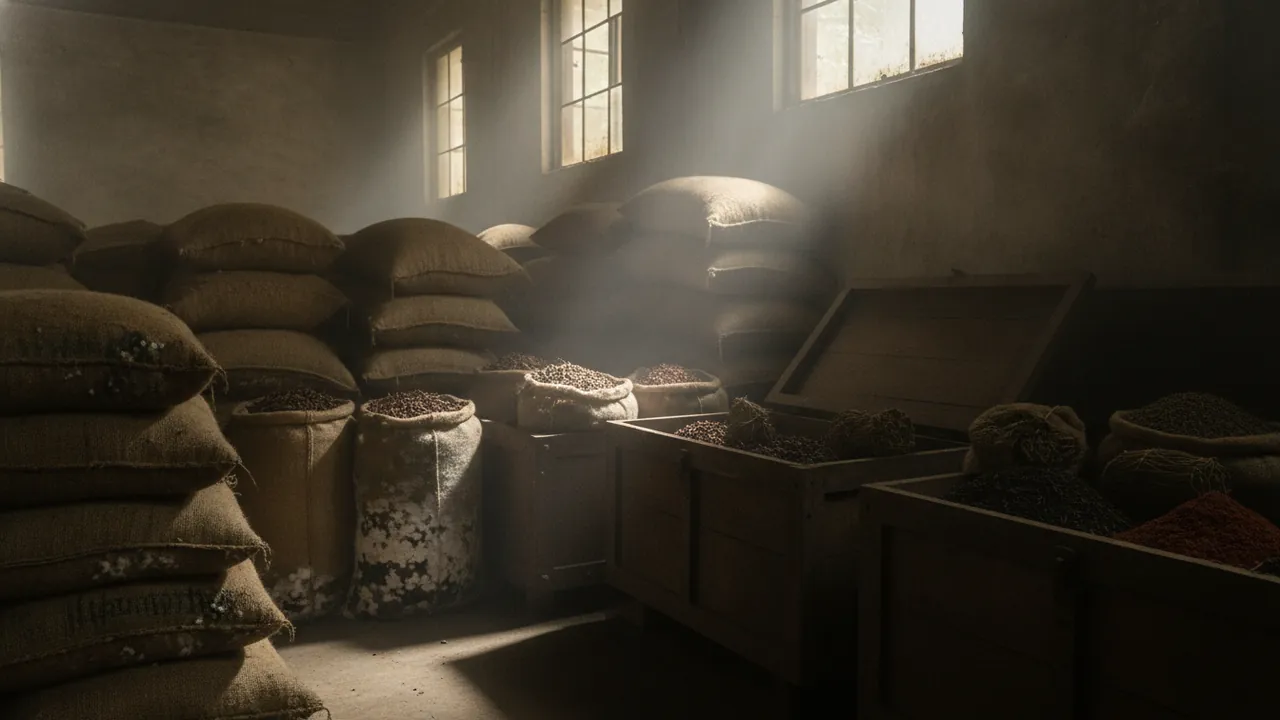
Ceylon tea, true cinnamon, black pepper, cloves, cardamom, the rice on every table — Sri Lanka’s most famous products are dried, careful harvests. The drying is the point. It concentrates the flavour, locks in the aroma and keeps them stable.
Then they go into storage, in a country where the air is 70–90% water — and the air starts trying to put the moisture back.
How does humidity damage tea, spices and rice?
Dried foods are hygroscopic: they absorb water vapour from the air around them. As they take on moisture, tea and spices lose their aroma and flavour, powders and grains clump, and if the moisture goes high enough, mould can grow. Some moulds can produce toxins, which is why food that has become damp and mouldy must be thrown away, not sold. The damage is slow and quiet — a dull cup, a clumped jar, a sack with a dark patch at its base.
The drying happens once. Keeping it dry has to happen every single day of storage.
What does humidity do to tea, spices and grains?
Tea
Made tea leaves the factory very dry. In humid storage it picks up moisture quickly, and the bright, brisk character that makes Ceylon tea famous turns flat and stale; in the worst cases it goes mouldy. That is why tea is packed in sealed, moisture-resistant packaging — and why opened stock in a damp shop or store deteriorates so fast. The Tea Research Institute of Sri Lanka is the national authority on tea quality.
Spices
Pepper, cinnamon, cloves, cardamom, chilli and curry powders lose their volatile oils — the aroma — faster in damp, warm conditions. Ground spices clump, and whole spices stored damp can grow mould.
Rice, flour and grains
Damp rice and flour can clump, smell musty and attract insects; badly stored grain can become mouldy. Sacks on concrete floors wick moisture up from below.
Coconut products, dried fruit, sugar and salt
Desiccated coconut, sugar and salt clump; dried fruit becomes sticky and mould-prone.
What are the most common food-storage mistakes?
- Sacks and chests directly on concrete floors or against outside walls.
- Stores with roller doors open to humid outdoor air all day.
- Opened stock left in the original, unsealed sack.
- No monitoring — nobody knows the store sits at 82% through the monsoon.
- Condensation where cool goods meet warm, humid loading bays. (The flood nobody reported.)
How should tea, spices and rice be stored in Sri Lanka?
Sealed, raised off the floor, away from walls, in a store kept well below 60% humidity, monitored, and rotated first-in, first-out.
- Measure first. Data-logging hygrometers in each store, for weeks, including nights and monsoon peaks.
- Keep stock off the floor and off the walls — on pallets, with an air gap.
- Seal everything you can: airtight bins, lined sacks, resealed packs, closed chests.
- Control the doors: strip curtains or fast doors on loading bays; keep doors shut between deliveries.
- Dry the store. Keep dry-goods stores well below 60% humidity. A store of up to about 80 m² suits DRYAir’s DA-35L; larger halls the DA-50L with a continuous-drain hose so it runs unattended. For bigger warehouses, several units work together — DRYAir’s industrial range covers it.
- First in, first out, and check stock regularly for clumping, odour or mould.
- Discard damaged food stock. Don’t repack, sell or use food that has gone mouldy.
For the wider picture of humidity in warehouses and plant rooms, see Rust never sleeps.
The bottom line
Sri Lanka’s greatest crops are dried with care — and then stored in some of the most humid air on earth. Keep them sealed, raised, monitored and in a dehumidified store, and the flavour that left the estate is the flavour that reaches the customer.
Questions readers ask
How does humidity affect stored tea?
Made tea is very dry when it leaves the factory, and it readily absorbs moisture from humid air. Damp tea loses its brightness and aroma, can taste flat or stale, and if it gets wet enough can become mouldy. That is why tea is packed in sealed, moisture-resistant packaging and should be stored in a cool, dry place.
How should spices and rice be stored in a humid climate?
In airtight containers or sealed packaging, off the floor and away from outside walls, in a room kept cool and well below 60% humidity. Bulk stores should be monitored with hygrometers and dried with dehumidifiers during the monsoon. Any stock that has become damp, clumped or mouldy should be discarded rather than sold or eaten.
Sources
- Tea Research Institute of Sri Lanka — Tea Research Institute of Sri Lanka
- US Environmental Protection Agency — Mold Course, Chapter 2: why mold grows and how moisture gets indoors
- US Environmental Protection Agency — A Brief Guide to Mold, Moisture and Your Home
Guidance from these bodies is general; figures for Sri Lanka come from our own reporting and DRYAir’s field experience.
Published . Spotted an error? Tell the desk.