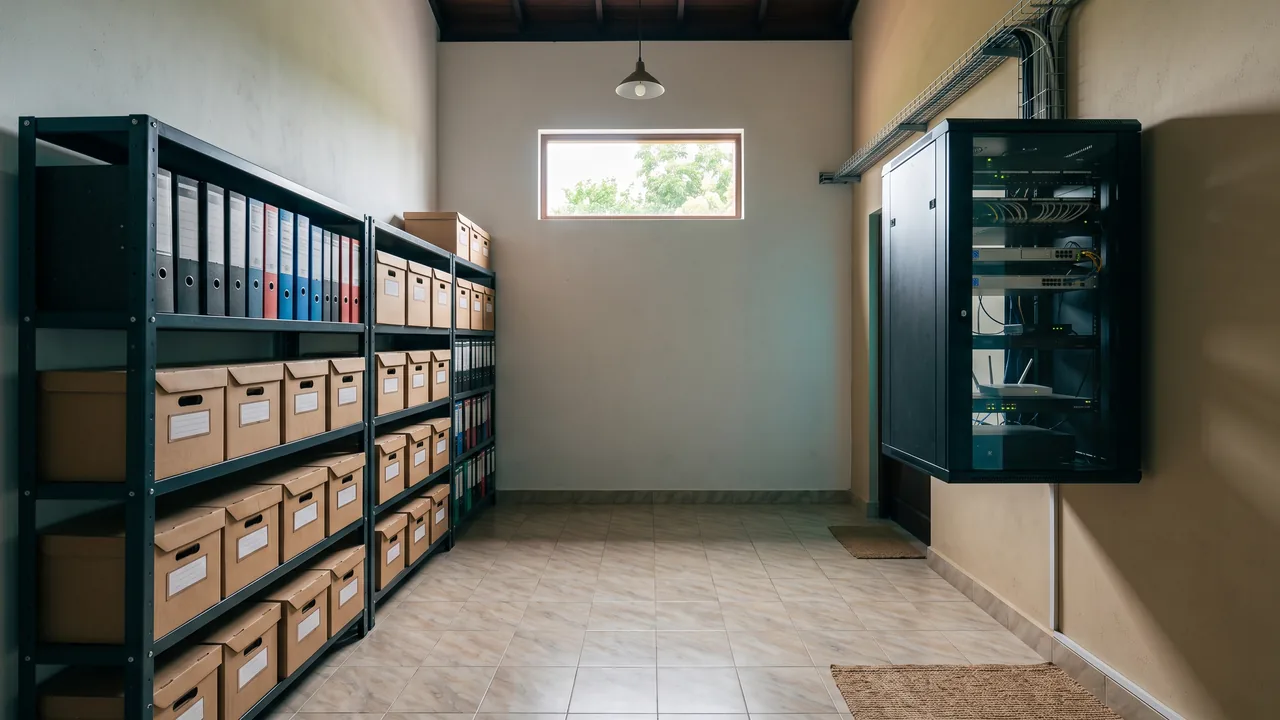
In a Sri Lankan warehouse, humidity does its damage quietly and continuously. No one sees it happen. Then someone opens a pallet of cartons and they fold like wet bread, a machine bearing seizes months early, or a batch of raw material arrives on the production line as a solid block.
At industrial scale, damp is not a comfort issue. It is stock, uptime and money.
How does humidity damage industrial sites?
Humid air corrodes metal, is absorbed by hygroscopic materials until they cake or spoil, condenses on any surface colder than its dew point, and weakens paper-based packaging. In Sri Lanka’s 70–90% outdoor humidity, and with loading doors open for much of the day, an unconditioned warehouse or plant room rarely drops below the danger zone.
Corrosion
Steel and iron corrode much faster once relative humidity stays above about 60%, and chlorides from sea air — a fact of life in Colombo, Negombo, Galle, Hambantota and Trincomalee — accelerate it further. Machinery, spare parts, tools, electrical panels, racking and stored steel all suffer. How damp attacks metal and electronics.

Caking and spoilage
Hygroscopic materials pull water straight out of the air: sugar, salt, flour, milk powder, spices, tea, fertiliser, cement, some chemicals and many powdered ingredients. They clump, lose flow, spoil or fail quality checks.
Condensation
Concrete floors cool overnight; chilled rooms, cold pipes and refrigerated trucks are colder still. When humid air meets a surface below its dew point, water forms on it — the “sweating floor” that makes forklifts slide and pallets wick up moisture.
Packaging and labels
Corrugated cartons lose much of their stacking strength as they absorb moisture. Labels curl, barcodes fail to scan, and shrink-wrap traps damp against the product.
A warehouse can be perfectly watertight and still be full of water — it just arrives as vapour.
Where it matters most
| Area | Typical problem | Suggested target |
|---|---|---|
| Spare-parts and tool stores | Rust on bearings, tools, electrical parts | Below 50–55% RH |
| Raw-material stores (powders, sugar, cement) | Caking, lumps, spoilage | Per material spec; generally below 60% |
| Finished-goods warehouses | Soft cartons, mould on packaging, curled labels | Below 60% RH |
| Plant and switch rooms | Corrosion of panels and contacts, tripping | Below 60% RH, stable |
| Cold-store anterooms and loading bays | Condensation, ice, slippery floors | Lower dew point at the door |
An industrial humidity plan
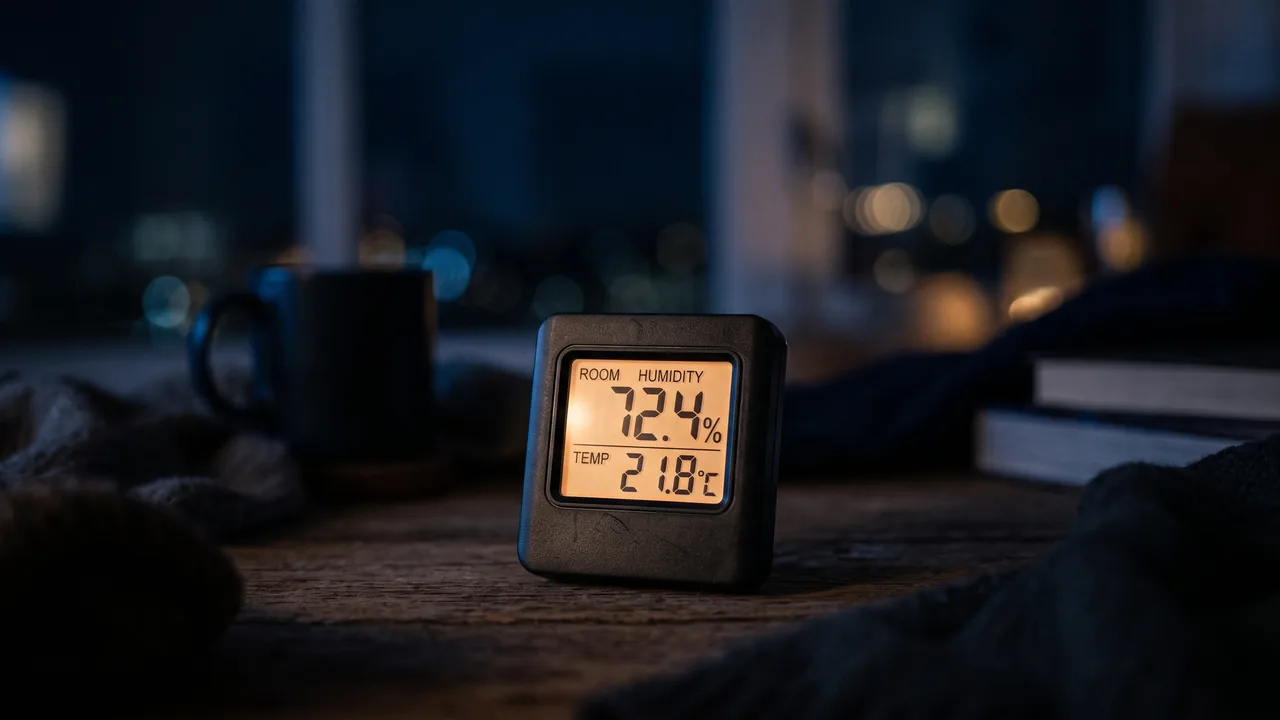
- Log before you spend. Data-logging hygrometers in each zone for several weeks, including nights, weekends and monsoon peaks.
- Zone it. Protect the critical areas — spare parts, raw materials, switch rooms — rather than trying to dry an entire open building at once.
- Control the doors. Strip curtains, fast doors and closing loading bays when not in use make every dehumidifier far more effective.
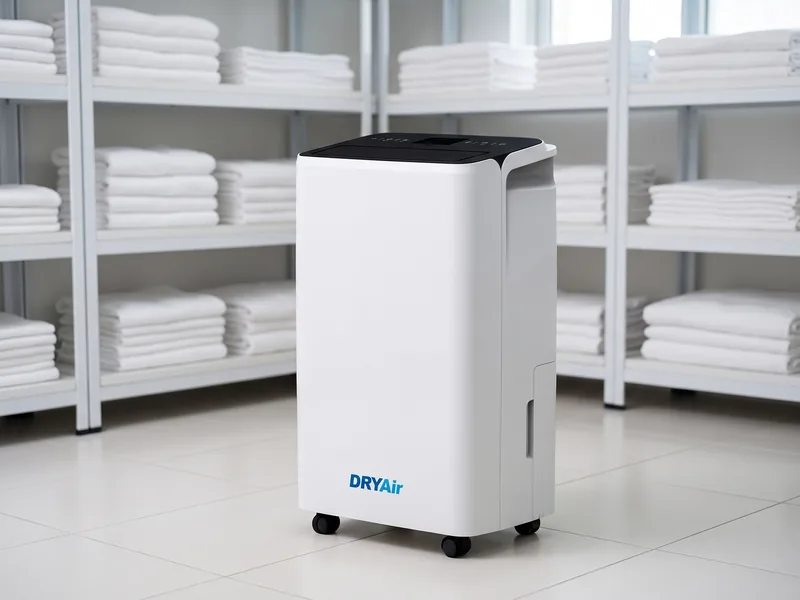
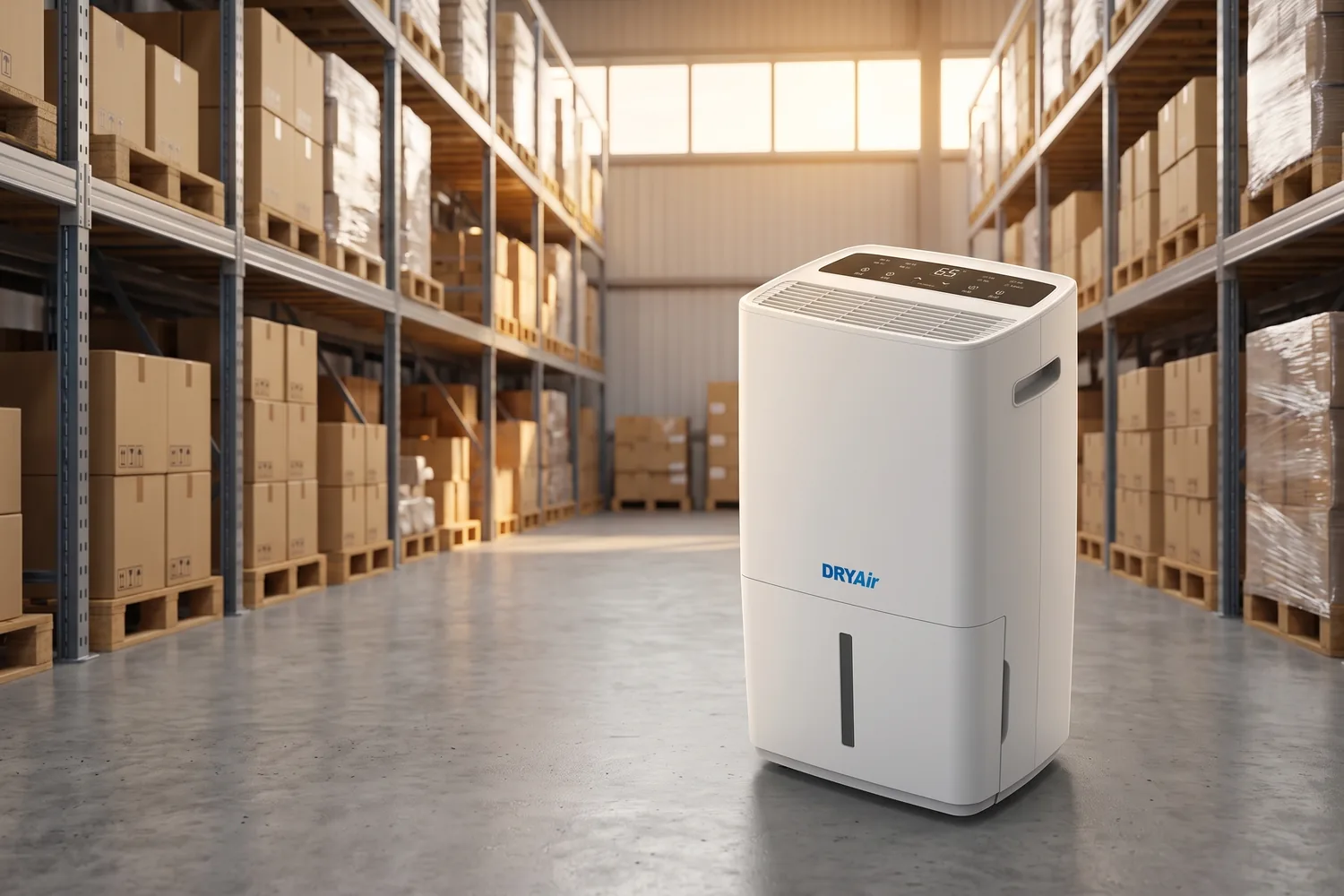
- Use high-capacity units with continuous drainage. 35–50 litres a day per zone, draining to a floor drain so the machines run unattended. Several units can cover larger zones.
- Keep stock off floors and walls: pallets, racking and a gap from outside walls.
- Service on a schedule. Industrial units run long hours in dusty spaces; filters and coils need regular cleaning, and a local service team matters.
The bottom line
In industry, humidity turns directly into write-offs, breakdowns and rework. Measure it, set a target below 60%, dry the zones that matter most and keep the doors under control. The cost of controlling damp is small next to the cost of stock and machinery it quietly destroys.
Questions readers ask
What humidity should a warehouse or factory store be kept at?
For most general goods, raw materials, packaging and machinery, keep storage areas below about 60% relative humidity. Hygroscopic materials, electronics, documents and some food ingredients need tighter control, and products with their own storage specifications should follow them. Measure over several weeks to see the real pattern, including nights and weekends.
Why is my warehouse floor wet when there is no leak?
The floor is colder than the air’s dew point, so moisture from humid air condenses on it — often after a cool night or when warm, humid air flows in through open loading doors. The fix is to lower the air’s humidity so its dew point sits below the floor temperature, and to limit how long doors stay open.
Can a portable dehumidifier handle a warehouse?
For zones up to roughly 100 m² — plant rooms, store cages, spare-parts rooms, sections of a warehouse — high-capacity portable units of 35–50 litres a day with continuous drainage work well, and several can be combined. Very large open buildings with doors that open constantly may need a professionally designed ducted system.
Published . Spotted an error? Tell the desk.