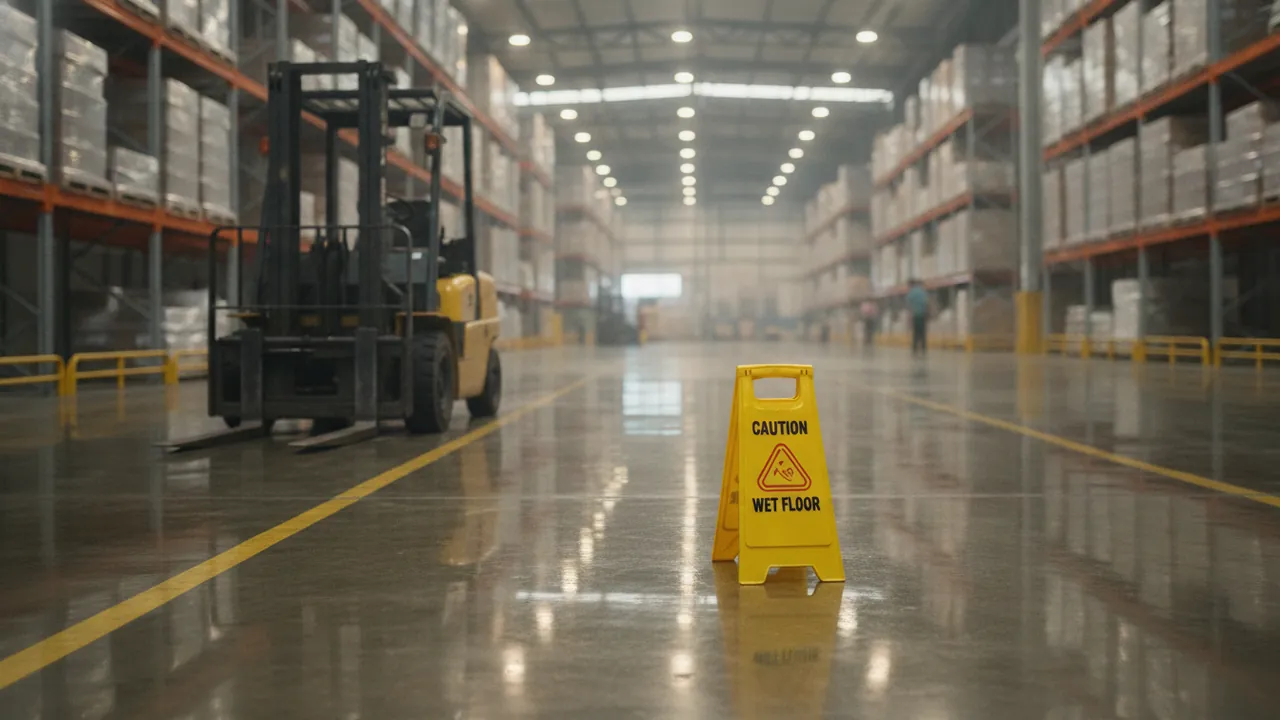
The night shift notices it first. The floor near the loading bay has a sheen on it. By 5 a.m. there are little puddles under the racking, the steel roof is dripping onto the top pallets, and someone has put out a yellow sign.
Nobody calls it a flood. Nobody reports a leak. But every morning, the building is wet.
Where is the water coming from?
From the air. When warm, humid air touches a surface that is colder than its dew point, the air can no longer hold all its water and it condenses on that surface. Concrete floors, steel roofs, racking, pipes and cold-store doors all cool down — and in Sri Lanka’s 70–90% humidity, the dew point is so high that even a slightly cool surface starts to “sweat”. It looks like a leak; it is physics.
It is worst:
- Early in the morning, after floors and roofs have cooled overnight.
- After rain, when the outdoor air is near saturation and loading doors are open.
- Near cold stores and chilled areas, where cold surfaces meet warm, humid air.
- When cold goods arrive in a warm loading bay and sweat on the pallet.
If the floor is wet every morning and there is no leak, the water is coming out of the air — and it will keep coming until the air is drier.
Why are wet warehouse floors dangerous?
A thin film of water on smooth concrete is extremely slippery. Workplace safety regulators — the US Occupational Safety and Health Administration and the UK Health and Safety Executive among them — treat slippery walking surfaces as a major cause of workplace injury. On a warehouse floor, the risk is not only people slipping: forklifts and pallet trucks lose traction, especially when braking or turning with a load.
Mopping and warning signs manage the symptom for an hour. Then the floor sweats again.
What else does condensation damage?
It rusts steel, soaks pallets and cartons, grows mould on stock and puts moisture into electrical panels.
- Rust: dripping roofs and wet racking corrode steel; coastal salt makes it faster. (Rust never sleeps.)
- Soaked stock: pallets wick up water; bottom-row cartons soften and collapse.
- Mould: on cartons, timber pallets and anything organic stored near the floor.
- Electrical risk: condensation in panels, junction boxes and charging areas.
How do you stop a warehouse floor sweating?
Lower the air’s dew point below the floor temperature with dehumidifiers, keep loading doors closed, and let cold goods acclimatise before they enter humid areas.
- Measure the dew point, not just the temperature. Data-logging hygrometers at floor level and near the doors, for a couple of weeks.
- Control the doors. Strip curtains or fast doors on loading bays; keep doors shut when not loading. Every open door imports humid air.
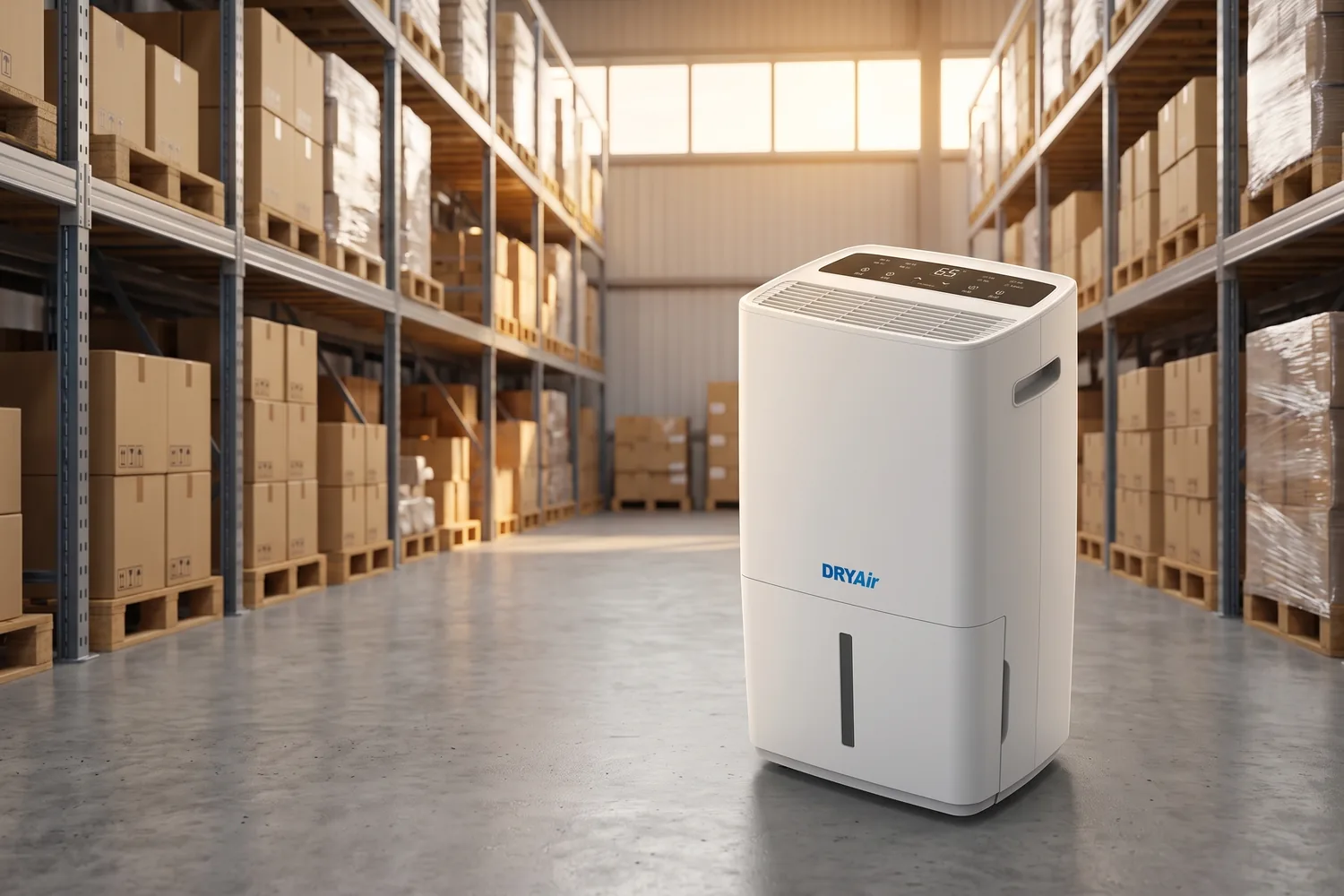
- Dehumidify the problem zones. High-capacity units with continuous drainage — DRYAir’s DA-50L moves 330 m³ of air an hour and covers up to about 110 m² per unit; several can work together across a larger floor.
- Buffer cold goods. Let chilled stock acclimatise in a dry area before it enters a warm, humid one.
- Raise stock off the floor and away from walls; keep electrical panels in dry, ventilated spaces.
- Keep the warning signs — until the floor stays dry.
DRYAir supplies warehouses and plant rooms across Sri Lanka; see its industrial range or ask for a site survey via dryair.lk/contact.
The bottom line
A warehouse can be perfectly watertight and still be wet every morning. That water is coming out of the air, and it brings slips, rust and spoiled stock with it. Lower the dew point and control the doors, and the flood nobody reported stops arriving.
Questions readers ask
Why is my warehouse floor wet in the morning?
Concrete floors cool overnight. When warm, humid air — from outside or from the day — touches a floor colder than the air’s dew point, water condenses on it, just as it does on a cold glass. In Sri Lanka’s humidity this can leave a film of water across the floor by morning without any leak.
How do you stop condensation in a warehouse?
Lower the humidity of the air so its dew point sits below the temperature of the floor, roof and steel. Use dehumidifiers sized for the space, keep loading doors closed when not in use with strip curtains or fast doors, and avoid bringing cold goods into warm humid areas without a buffer zone.
Sources
- US Occupational Safety and Health Administration — Walking-Working Surfaces
- UK Health and Safety Executive — Slips and trips at work
- International Organization for Standardization — ISO 9223: Corrosion of metals and alloys — Corrosivity of atmospheres
- US Environmental Protection Agency — A Brief Guide to Mold, Moisture and Your Home
Guidance from these bodies is general; figures for Sri Lanka come from our own reporting and DRYAir’s field experience.
Published . Spotted an error? Tell the desk.