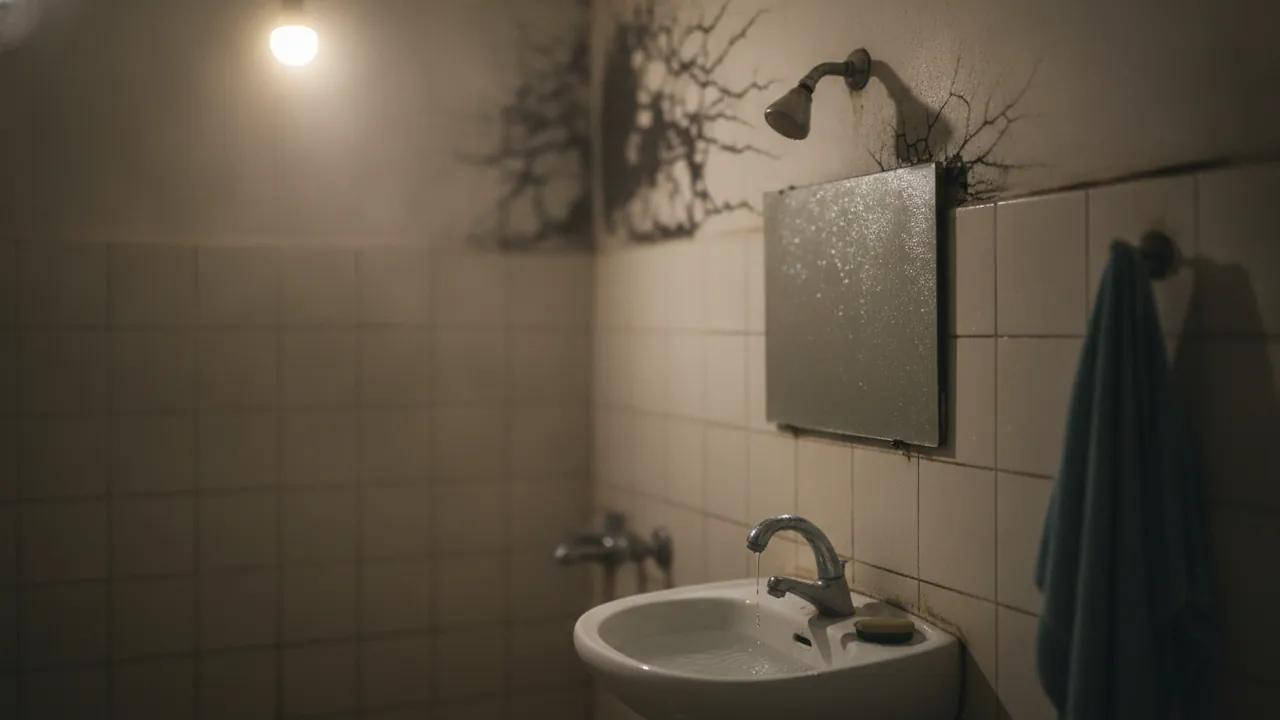
There is a room in almost every Sri Lankan home where the air hits close to 100% humidity every single day. It is small, closed, tiled, and lit by one bulb. Everyone uses it, nobody thinks about it — until the grout turns black.
Why is the bathroom the dampest room in the house?
Because every hot shower and bucket bath releases a large amount of water vapour into a small space, and the steam condenses on cooler tiles, grout, sealant, mirrors and the ceiling. In a home where the background humidity is already 70–85%, those surfaces stay wet for hours afterwards — and mould needs only a few days of that to establish itself. Add soap residue and skin cells as food, and the bathroom becomes a mould factory.
Then the door opens, and the steam goes looking for the next cool surface — usually in the corridor or the nearest bedroom.
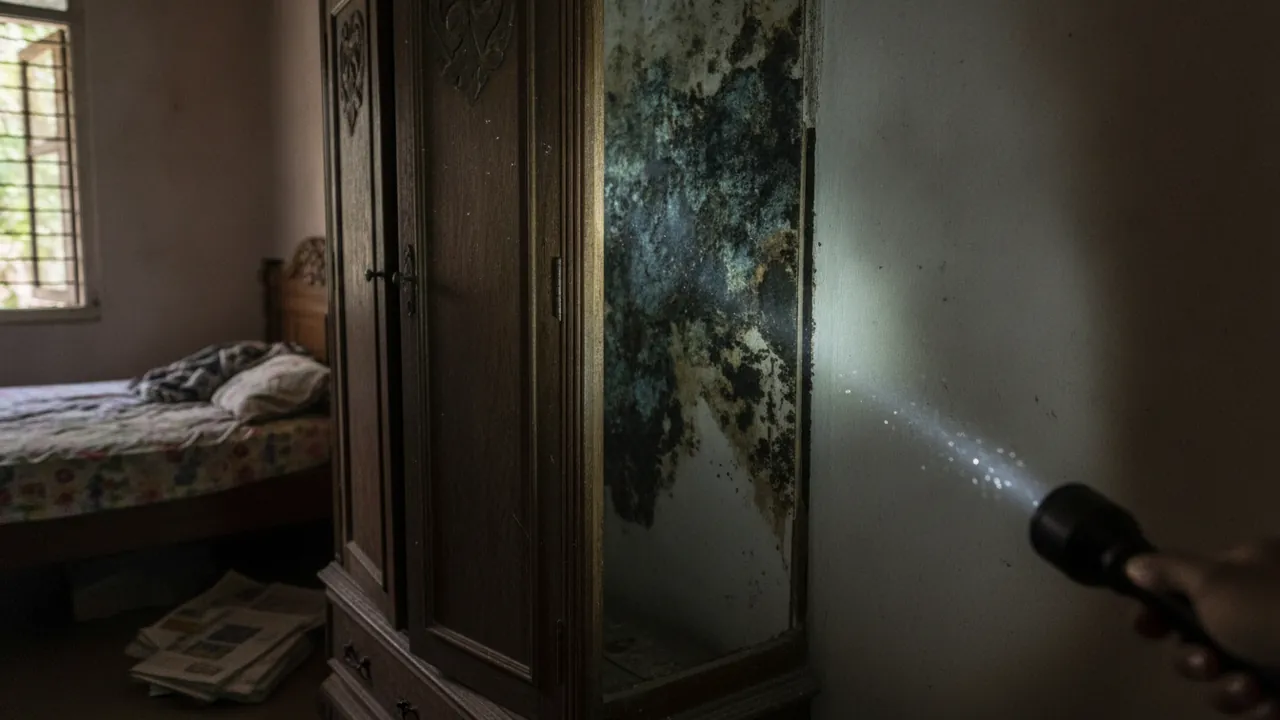
The mould you find on the bedroom wall next to the bathroom often started in the shower.
Where does bathroom mould grow first?
In the grout and sealant, on the ceiling above the shower, behind the toilet cistern, under the basin and around window frames and mirrors.
- Grout lines between tiles, especially low on walls and in shower corners
- Silicone sealant around the basin, bath and shower tray
- The ceiling, especially above the shower and in corners
- Behind the toilet cistern and under the basin
- Window frames and the mirror edges
- The back of the door and the towel rail
- Inside the exhaust fan — if there is one and it hasn’t been cleaned
Is it just ugly, or is it a problem?
Small black grout spots look minor, but they are a sign that the room spends much of the day damp enough for mould. The WHO links damp, mouldy homes with breathing problems, and the musty smell from a mouldy bathroom drifts into the rest of the house. Persistent damp also loosens tiles, blows paint and rots timber door frames. (What the damp is doing to your walls.)
How do you stop bathroom mould?
Close the door while showering, run the extractor fan for about 20 minutes afterwards, squeegee the walls, hang towels outside, clean the grout weekly, and dry the rooms next door.
During the shower
- Close the bathroom door so steam doesn’t spread through the house.
- Run the extractor fan — or open the window if the outdoor air isn’t pouring with rain.
- Shorter, cooler showers make less steam.
Straight after
- Keep the fan running about 20 minutes. Most people switch it off too early.
- Squeegee the walls and screen. Thirty seconds removes most of the water that would otherwise sit on the grout for hours.
- Hang towels outside the bathroom — damp towels in a closed bathroom keep it wet all day.
- Leave the door slightly open once the steam has cleared, so air can move.
Every week
- Clean grout and sealant with detergent and a brush before spots spread. The US EPA advises cleaning mould off hard surfaces and drying them completely.
- Check under the basin and behind the cistern for slow leaks — a drip you can’t see is a mould farm.
- Clean the extractor fan grille so it actually moves air.
Dry the rooms around it
Even with good habits, a bathroom in a humid home pushes moisture into the rooms next door. Running a dehumidifier in the adjoining bedroom or corridor — set to 50% and placed safely away from water — stops the steam from settling on the next cool wall. DRYAir’s DA-12LC suits a bedroom; a whole apartment usually needs the DA-20L. DRYAir’s guide to mould in Sri Lankan homes covers the rest of the house.
The bottom line
The bathroom produces more moisture than any other room in your home, every day. Extract it, squeegee it, keep the door shut while it is steaming, and dry the rooms next door — and the mould factory down the hall closes for business.
Questions readers ask
Why does my bathroom get black mould?
Showers fill a small room with steam that condenses on cooler tiles, grout, sealant and the ceiling. Those surfaces stay wet for hours, especially without an extractor fan or window, and soap residue gives mould food. In Sri Lanka’s already humid air, the bathroom may never fully dry between showers.
How do I stop mould in the bathroom?
Run an extractor fan during and for about 20 minutes after every shower, keep the bathroom door closed so steam doesn’t spread, squeegee walls and screens, hang towels outside, fix dripping taps and leaks, and clean grout regularly. If the bathroom has no fan or window, a small dehumidifier placed safely outside the wet area can help.
Sources
- US Environmental Protection Agency — A Brief Guide to Mold, Moisture and Your Home
- US Environmental Protection Agency — Mold Cleanup in Your Home
- US Environmental Protection Agency — Mold Course, Chapter 2: why mold grows and how moisture gets indoors
- World Health Organization — WHO guidelines for indoor air quality: dampness and mould (2009)
Guidance from these bodies is general; figures for Sri Lanka come from our own reporting and DRYAir’s field experience.
Published . Spotted an error? Tell the desk.