Pour a glass of iced water on a Colombo afternoon and within seconds the outside of the glass is dripping. That water did not leak through the glass. It came out of the air.
That is the whole idea behind a dehumidifier. Everything else is engineering.
How does a dehumidifier remove water from the air?
A compressor (refrigerant) dehumidifier draws room air across a very cold metal coil. Water vapour in the air condenses on the coil — exactly like the glass — and drips into a tank. The now-drier air then passes over a warm coil and is blown back into the room. A built-in humidity sensor, the humidistat, switches the machine on and off to hold the level you set.
Step by step:
- A fan pulls humid room air in through a filter at the back or side.
- The cold coil (evaporator) chills that air below its dew point. The water it can no longer hold condenses into droplets.
- The water drips into a tank — or, on models with a drain outlet, runs away through a hose.
- The warm coil (condenser) re-heats the dried air, using the heat the machine just took out of it.
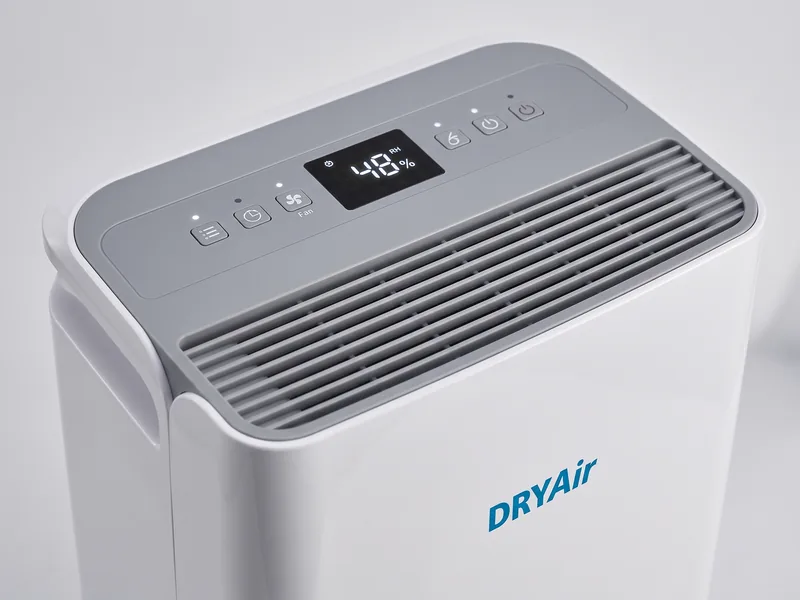
- Dry air leaves through the top grille, and the cycle repeats until the room reaches your set humidity.
Why doesn’t an air conditioner do the same job?
It does part of it — but only as a side effect. An AC also has a cold coil, and it also condenses water (that is the drip from the outdoor unit). The difference is what it is trying to control.
| Air conditioner | Dehumidifier | |
|---|---|---|
| Controls | Temperature | Humidity |
| Dries the air when… | Actively cooling | Room is above the humidity you set |
| Stops when… | Room reaches set temperature | Room reaches set humidity |
| Where it works | Rooms with an AC installed | Any room — including stores, wardrobes, basements |
| Leaves the room | Colder | About the same temperature, drier |
Once an air-conditioned room reaches, say, 24 °C, the compressor cycles down and drying largely stops — while people, cooking and outside air keep adding moisture. That is why an AC’d bedroom can feel cold and clammy, and why the chilled walls in such rooms are classic mould spots. Oversized AC units are worst: they cool the room fast and shut off before removing much water.
An air conditioner asks, “Is it cool enough?” A dehumidifier asks, “Is it dry enough?” In Sri Lanka you usually need the second question answered.
The two work well together. A dehumidifier holding a bedroom at 50% lets you set the AC a couple of degrees warmer and still feel comfortable, because dry air lets sweat evaporate.
Compressor or desiccant?
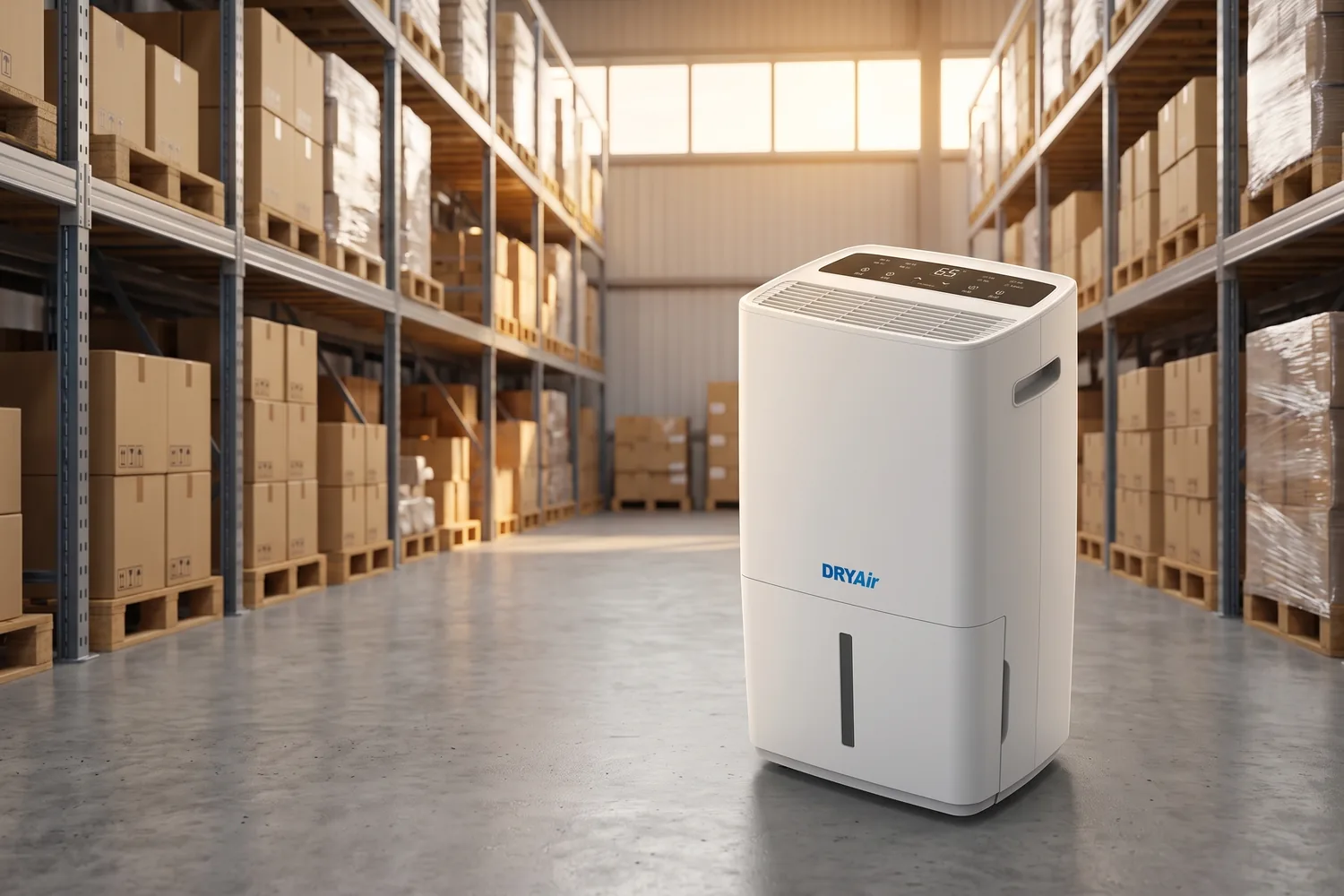
Most home and office dehumidifiers — including the models sold by the major Sri Lankan suppliers — are compressor machines, and they are the right choice for the island’s warm lowlands, where they are most efficient.
Desiccant dehumidifiers use a rotating wheel of moisture-absorbing material instead of a cold coil. They keep working well in cold rooms, which makes them a specialist option for chilly spaces — but they use more electricity in warm climates and are rarer here. For cool hill-country homes, see our Nuwara Eliya and Kandy guide.
What should a good dehumidifier have?
- An adjustable humidistat — so you set 50% and forget it.
- Capacity rated at realistic conditions — look for litres per day at 30 °C and 80% RH, which is close to Sri Lankan reality.
- Auto shut-off when the tank is full, and a clear tank-full light.
- A continuous-drain outlet if you do not want to empty a tank daily.
- Auto-restart after a power cut, so it resumes after a CEB interruption.
- A low noise rating for bedrooms, and a washable filter.
The bottom line
A dehumidifier is a refrigerator turned inside out: cold coil in, warm coil out, water in the bucket. Unlike an air conditioner, it aims at the number that matters for mould, mites and rust — humidity — and it keeps working whether the room is cool or not. Next: which size you need.
Questions readers ask
What is the difference between a dehumidifier and an air conditioner?
An air conditioner is built to lower temperature and removes some moisture as a side effect while it is cooling. A dehumidifier is built to lower humidity; it condenses water out of the air and returns the air at about the same temperature or slightly warmer, to a humidity level you set. In humid Sri Lanka, rooms can be cool but still damp — that is where a dehumidifier helps.
Does a dehumidifier make a room hot?
A compressor dehumidifier adds a little warmth, because it releases the heat it removed from the air plus the heat of its motor. In practice the effect in a normal room is small, and drier air feels cooler on the skin because sweat evaporates more easily, so most people find the room more comfortable, not less.
Where does the water go?
Into a removable tank that you empty, usually once or twice a day in the monsoon, or through a hose into a drain if the model has a continuous-drain outlet. The unit switches itself off when the tank is full.
Published . Spotted an error? Tell the desk.