The most common mistake people make with a dehumidifier is buying one that is too small, putting it in the corridor, and deciding dehumidifiers don’t work. The second most common is buying one that is far too big for a bedroom and then never switching it on because of the hum.
Getting the size right is easy once you know what the numbers mean.
What do “litres per day” actually mean?
A dehumidifier’s capacity is the amount of water it can pull out of the air in 24 hours, in litres per day (L/day), under standard test conditions — usually 30 °C and 80% relative humidity. Those conditions are close to a Sri Lankan monsoon afternoon, which makes the figure unusually realistic here.
Two things to know:
- At lower humidity the same machine removes less water, because there is less to take. A 20 L/day unit might pull closer to 10 L/day at 27 °C and 60% RH. That is normal, not a fault.
- The figure is a capacity, not a promise. Once the room reaches your set humidity, the machine idles and collects much less.
Which size do I need for my room?
Start with the floor area — length × width in metres — then adjust for how damp the space is.
| Capacity | Room size | Typical spaces |
|---|---|---|
| 12 L/day | up to ~34 m² (≈370 sq ft) | Bedrooms, studies, walk-in wardrobes, small cabins |
| 20 L/day | up to ~50 m² (≈540 sq ft) | Living rooms, apartments, offices, hotel suites |
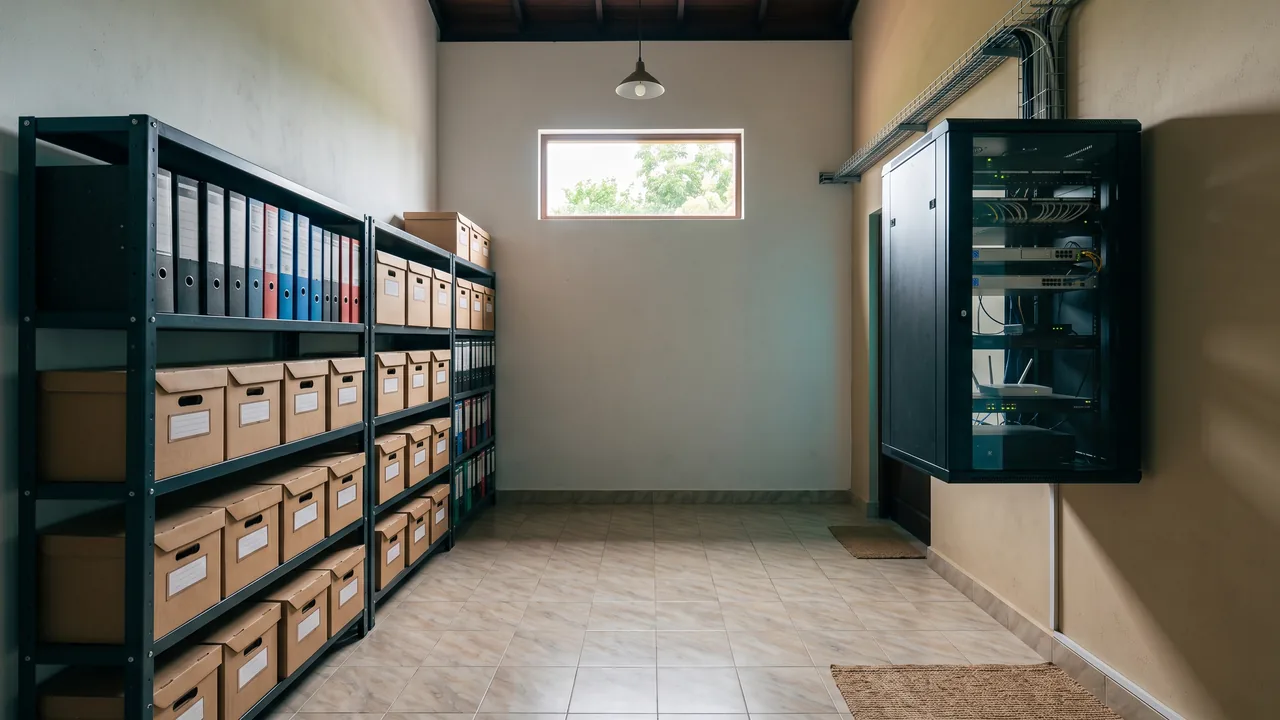
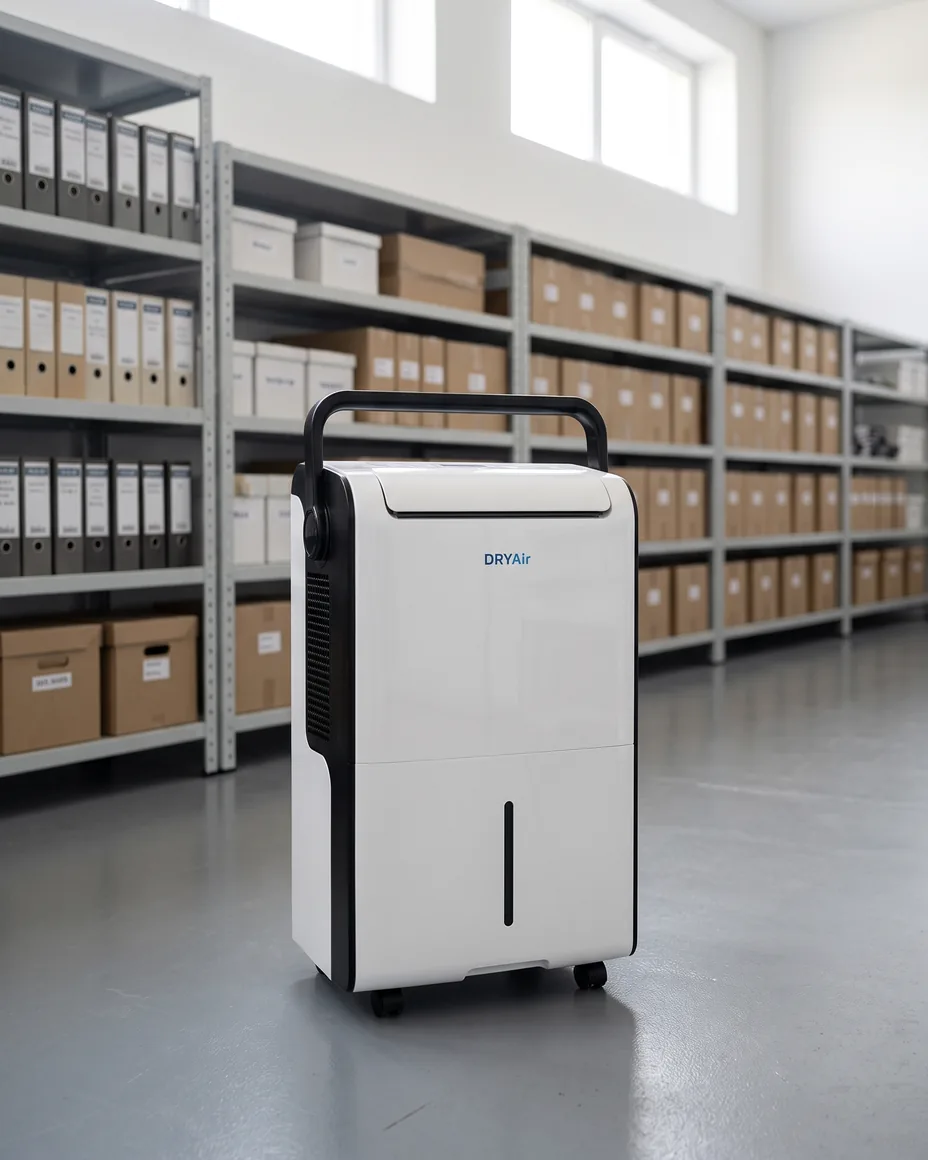
| 35 L/day | up to ~80 m² (≈860 sq ft) | Open-plan floors, shops, archives, stores |
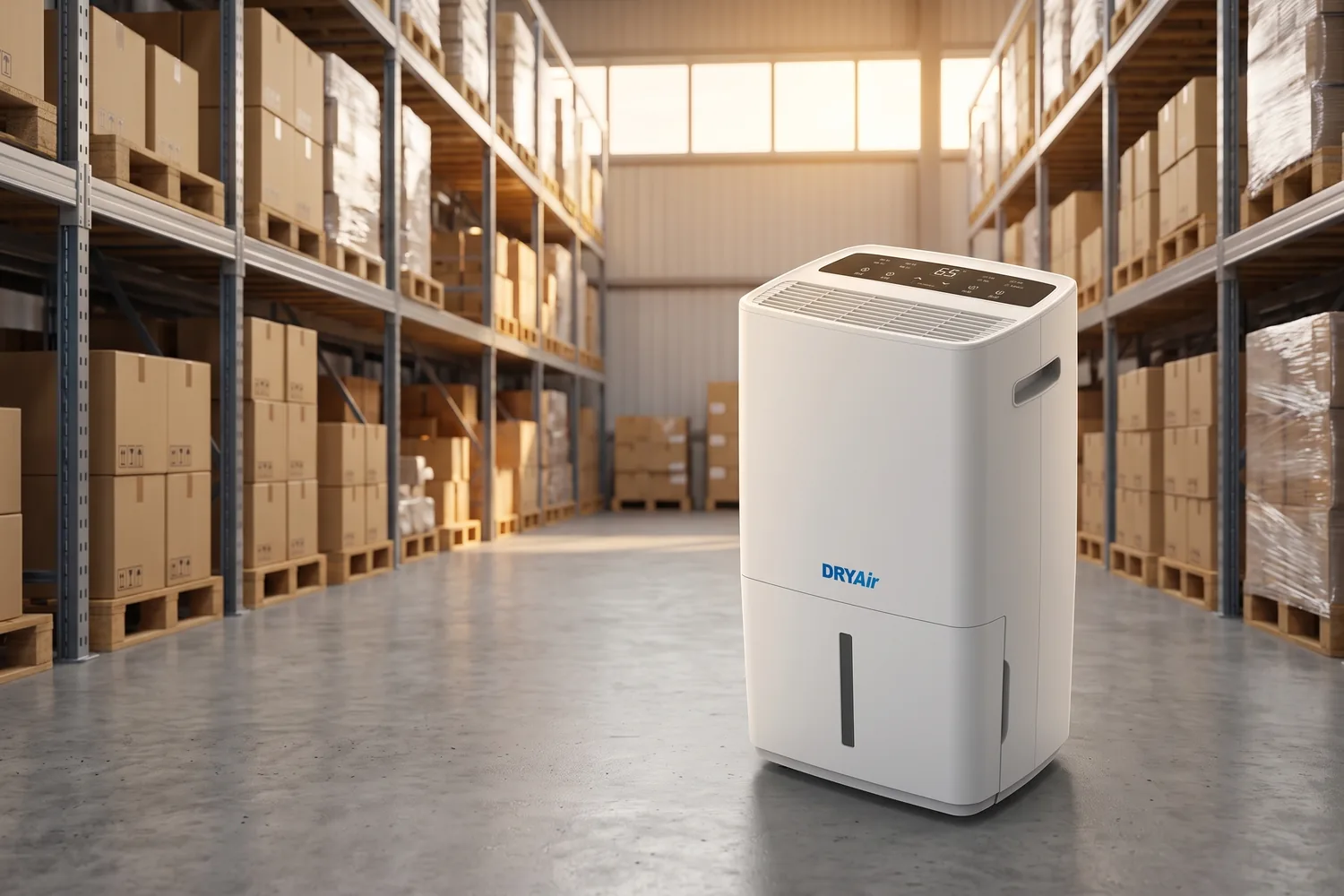
| 50 L/day | up to ~110 m² (≈1,180 sq ft) | Warehouses, halls, plant rooms, basements |
Too lazy to do the maths? Our room sizer does it in two taps.
Size for the room you have, not the room you wish you had. Then go one size up if it already smells damp.
Worked examples
- A 3.5 m × 4 m bedroom in Nugegoda is 14 m². A 12 L/day unit is plenty, and its low noise matters more than extra capacity.
- A 40 m² living-and-dining room in a Rajagiriya apartment fits a 20 L/day unit.
- A 60 m² ground-floor shop in Pettah, with the door opening all day, should go to 35 L/day.
- A 90 m² stationery or textile store needs 50 L/day — and possibly two units if it is split into rooms.
Features that matter after size
Noise. For bedrooms, look for a decibel rating around 40 dB or lower. Every extra 10 dB sounds roughly twice as loud.
Tank and drain. A bigger tank means fewer trips to the sink. A continuous-drain outlet lets you run a hose to a floor drain and forget about emptying altogether — essential for stores and anything running 24/7.
Humidistat. You want to set a target, such as 50%, and have the unit hold it. Avoid machines with only “high/low”.
Auto-restart. After a power cut the unit should resume on its own with your settings.
Filter. Washable, easy to reach. Clean it every couple of weeks in dusty homes.
Warranty and service. This matters more than people think. A dehumidifier contains a compressor and refrigerant, just like a fridge. Buy from a seller who can service it locally, keeps parts, and will pick up the phone next year.
What about running costs?
A dehumidifier uses electricity mainly while its compressor runs, and once a room is dry it cycles on and off. To estimate your cost, take the unit’s rated power in watts, multiply by the hours the compressor actually runs, divide by 1,000 to get units (kWh), and multiply by the rate on your CEB or LECO bill. A correctly sized machine running to a 50% setting costs far less than one running flat out in an open-door room. More in dehumidifier myths, busted.
Where to buy in Sri Lanka
DRYAir, Sri Lanka’s dehumidifier specialist since 2016, sells four models that match the table above — the 12 L/day DA-12LC, 20 L/day DA-20L, 35 L/day DA-35L and 50 L/day DA-50L — from its showroom at 112 Lauries Rd, Colombo 4, and online at dryair.lk. Each comes with a 365-day warranty serviced by DRYAir’s own team, and they will size a unit for you over WhatsApp if you send the room measurements. See all the options on our Where to Buy page.
Questions readers ask
What does 12 litres per day mean on a dehumidifier?
It is the amount of water the machine can remove from the air in 24 hours under test conditions, usually 30 °C and 80% relative humidity. At lower humidity it removes less, because there is less water to condense. Use the figure to compare models and size the unit to the room.
Is a bigger dehumidifier better?
Only up to a point. A larger unit dries a room faster and runs for shorter periods, which helps in very damp rooms, but costs more to buy and is bigger and louder. Match capacity to floor area, then size up one step for damp ground floors, basements or rooms with visible mould.
Can one dehumidifier do the whole house?
Rarely, unless the house is open-plan. A dehumidifier dries the air it can reach, and walls and closed doors block it. Put a correctly sized unit in the room that matters most — usually the main bedroom or a store — and move it or add units as needed.
Published . Spotted an error? Tell the desk.