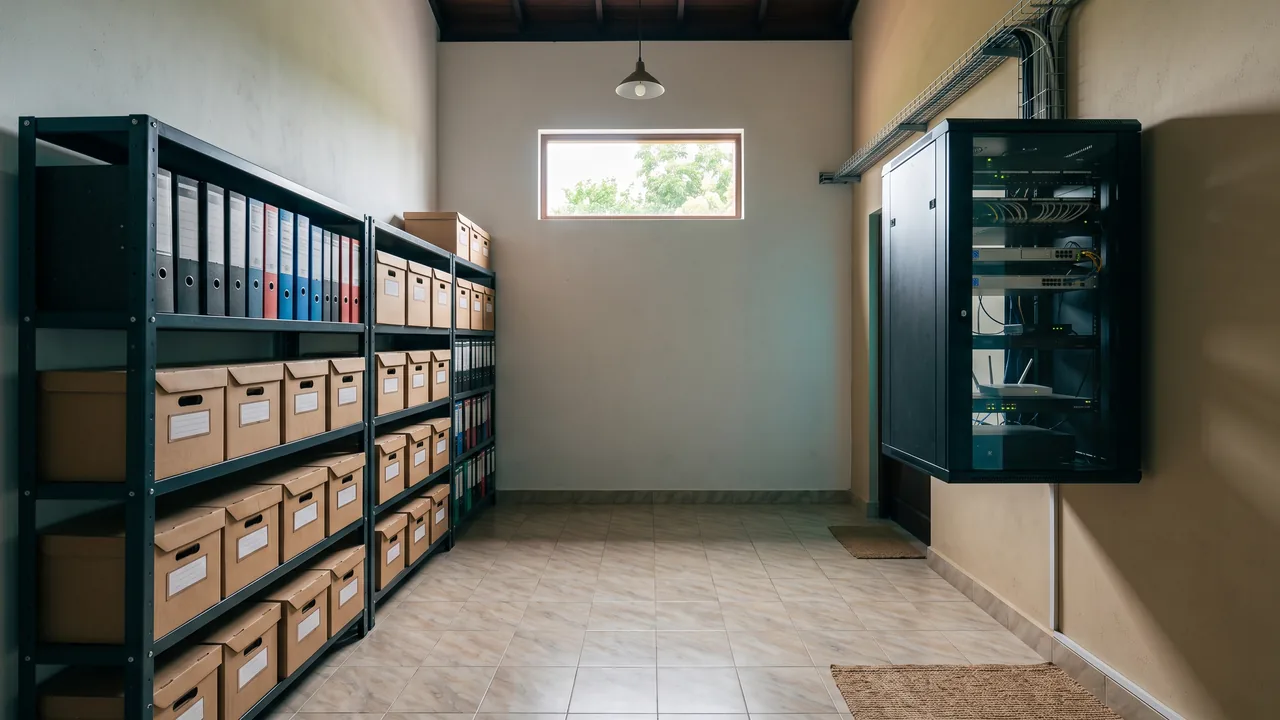
Every office has one. The meeting room nobody books if they can help it. The corner where people always seem to have a cold. The file room that makes your nose run in five minutes.
Often nobody connects the dots. But there is usually something in common: the air.
Can a damp office really affect people’s health?
Yes. The World Health Organization links damp and mouldy buildings to coughing, wheezing, asthma and respiratory infections, and the US EPA notes that poor indoor air quality is associated with headaches, fatigue and irritation of the eyes, nose and throat. When symptoms improve as soon as people leave the building, the building’s air is a prime suspect. Damp air is one of the most common culprits in Sri Lanka, because it feeds mould, dust mites and bacteria in exactly the places nobody looks.
The pattern people describe is consistent:
- Headaches and a heavy, tired feeling that build through the day
- Itchy eyes, blocked noses and sneezing at work
- Coughs and asthma that ease on weekends and holidays
- Complaints that a particular room is “stuffy” or “smells”
These symptoms have many causes. But if several people share them, and they track with time in the building, look at the air.
If your staff feel better on Monday morning than on Friday afternoon, the office may be the problem.
Where does damp hide in an office?
Offices are designed to look clean. The damp lives where the design stops:
- Above the ceiling tiles. Condensation on chilled ducts and pipes drips into the void; stained or sagging tiles are the giveaway.
- Inside the AC units. Drip trays and coils that are not cleaned grow mould and bacteria, then blow them across the floor.
- In carpet, especially near entrances and windows.
- Behind filing cabinets and cupboards on outside walls.
- In file rooms and archives, closed for days at a time. (Humidity in offices, server rooms and archives.)
- In pantries and washrooms without working extractor fans.
Why does office humidity spike at weekends?
Most office air-conditioning switches off at night and over the weekend. With the building sealed and nothing removing moisture, humidity can climb back to 70–80% by Sunday night. Every weekend is a small monsoon for the ceiling void and the file room. Then on Monday the AC runs hard to cool the space — and the cold coils and ducts collect condensation in the damp air.
How should an office control humidity?
Log humidity around the clock, inspect the hidden places, clean or replace mouldy materials, and keep problem rooms at 45–55% with dehumidifiers that keep running after hours.
- Log humidity for two weeks, including nights and weekends, in the main floor, meeting rooms, file room and server room.
- Inspect the hidden places: lift ceiling tiles near AC ducts, open AC units, check behind cabinets.
- Clean or replace mould-stained tiles, carpet and AC components; service AC units regularly.
- Dry the problem rooms continuously, including after hours. A file room or meeting room usually needs a 20 L/day unit like DRYAir’s DA-20L; an open-plan floor a DA-35L with continuous drainage.
- Fix ventilation in pantries and washrooms.
- Ask staff. A two-question survey — “Which room makes you feel worse?” and “When?” — often finds the problem faster than any meter.
DRYAir serves offices, archives and server rooms across Colombo; their overview of the benefits of dehumidifiers covers the business case.
The bottom line
An office can look spotless and still have air that works against the people in it. Measure humidity around the clock, find the hidden damp, and keep the air in the 45–55% range. Your staff — and your sick-leave numbers — will notice.
Questions readers ask
Can a damp office make employees sick?
Damp and mould indoors are linked by the WHO to respiratory symptoms, allergies and asthma, and poor indoor air quality more generally is associated with headaches, fatigue and eye, nose and throat irritation. When symptoms ease after people leave the building, the building’s air is a likely factor. Investigate humidity, ventilation and hidden mould.
What humidity should an office be kept at?
Between about 40% and 60% relative humidity, ideally 45–55%. In that range people are comfortable, mould and dust mites cannot establish themselves, and paper and equipment stay stable. Measure it at night and on weekends too, when air conditioning is off and humidity climbs.
Sources
- US Environmental Protection Agency — Introduction to Indoor Air Quality
- World Health Organization — WHO guidelines for indoor air quality: dampness and mould (2009)
- ASHRAE — Standard 55: Thermal Environmental Conditions for Human Occupancy
- World Health Organization — WHO Housing and health guidelines (2018)
Guidance from these bodies is general; figures for Sri Lanka come from our own reporting and DRYAir’s field experience.
Published . Spotted an error? Tell the desk.