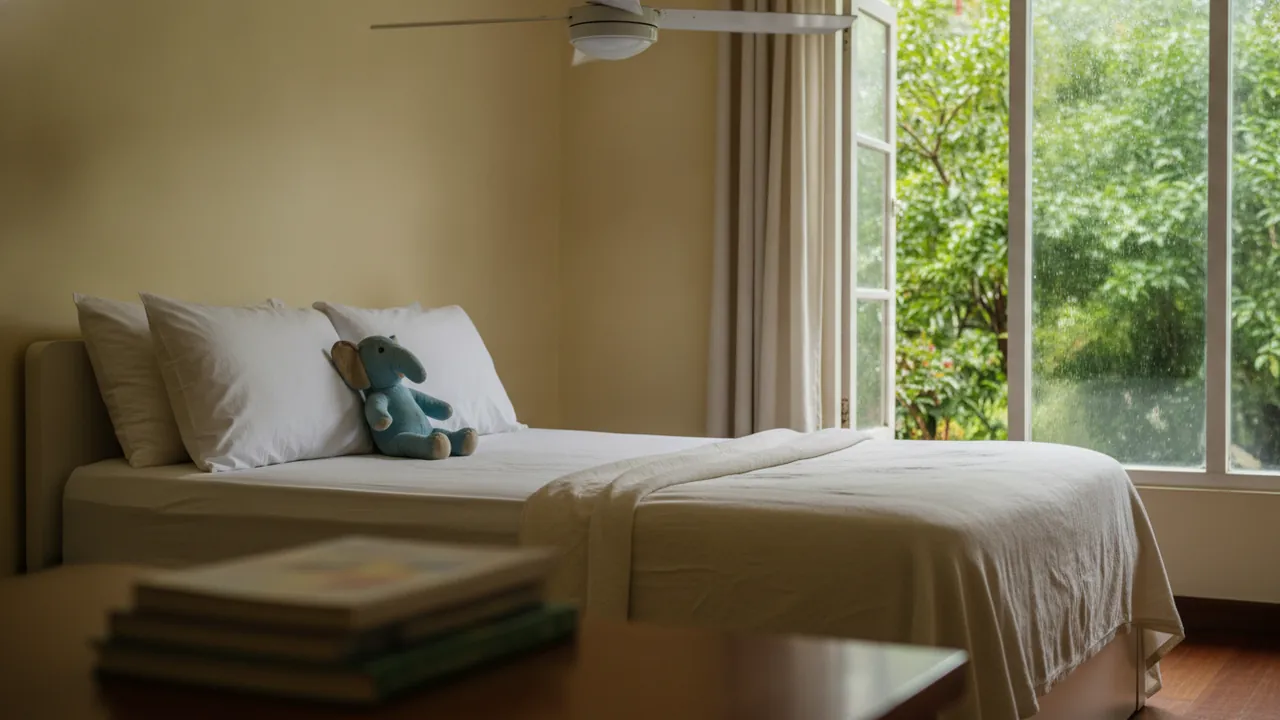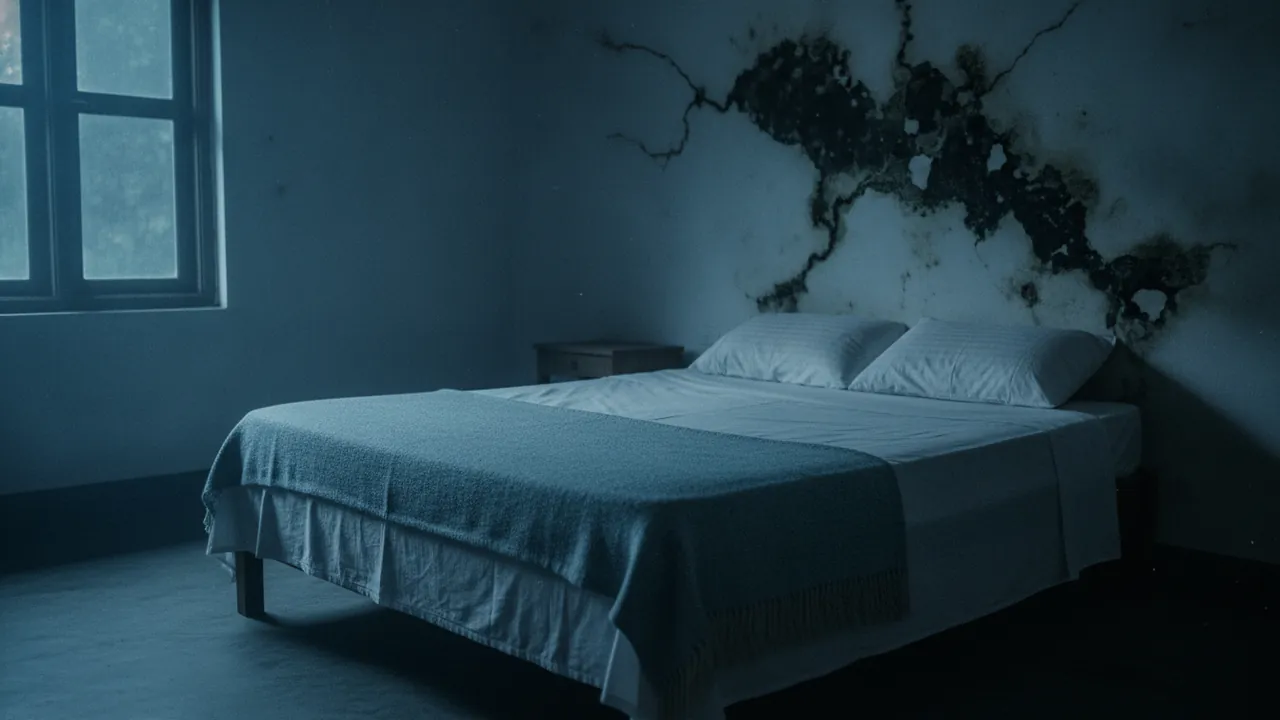
Think about where you breathe the most. Not the office, not the car, not the kitchen. For most people on this island the answer is the bedroom: seven or eight hours every night, door shut for privacy or the AC, windows closed against mosquitoes and rain, face pressed into a pillow.
Now think about where mould grows best. A closed room, still air, a cool outside wall, a mattress full of the night’s moisture.
It is the same room.
Is it really dangerous to sleep with mould in the room?
Health authorities are clear that damp and mouldy homes are bad for breathing. The World Health Organization’s guidelines on dampness and mould link them to more coughing, wheezing, asthma and respiratory infections, and UK government guidance warns that children, older people and people with asthma or weakened immunity are especially vulnerable. The bedroom concentrates the risk, simply because of how many hours you spend breathing its air.
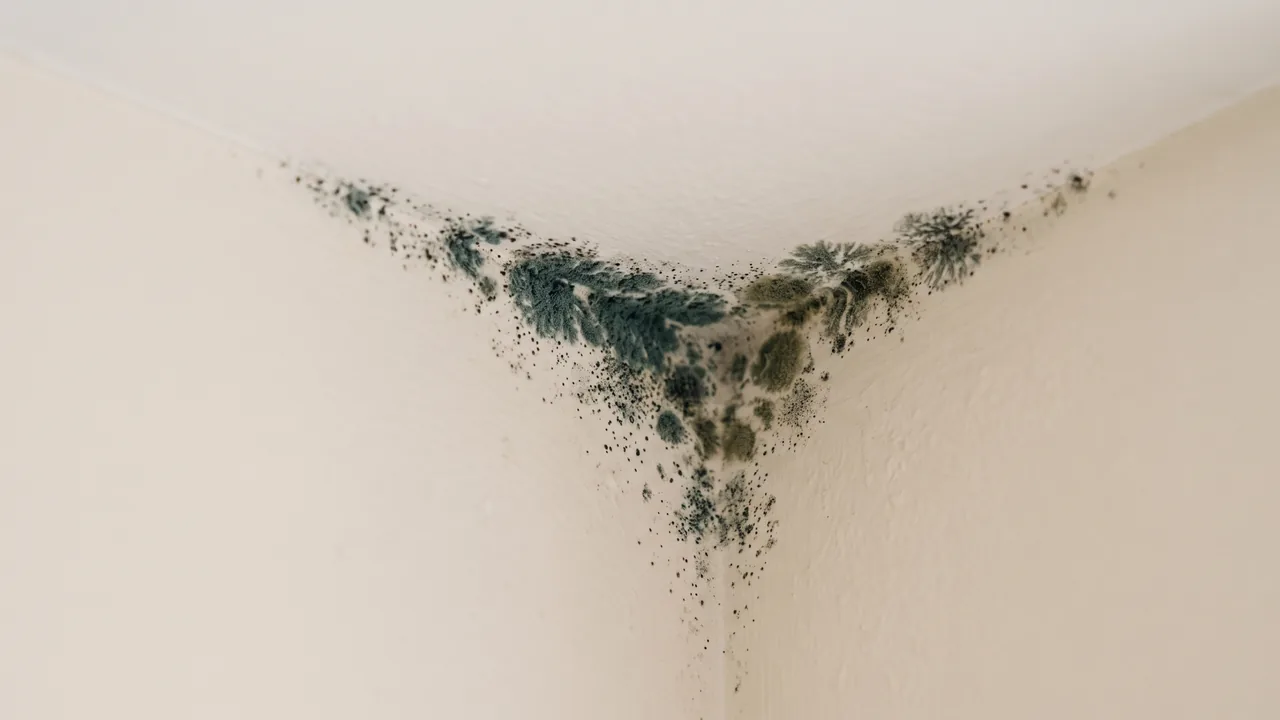
Mould releases tiny spores and fragments into the air, along with the compounds behind that musty smell. When the colony is on the wall behind your headboard, or growing quietly inside the mattress, you breathe that air all night.
You would never sit in a mouldy room for eight hours by choice. Most of us do it every night without knowing.
What are the symptoms of mould exposure in the bedroom?
The most common signs are a blocked or runny nose, sneezing, itchy eyes, and a cough or wheeze that are worse at night or on waking — and ease when you are away from home. The trouble with bedroom mould is that its effects are easy to blame on something else. Watch for symptoms that are worse at night or first thing in the morning and better when you are away from home:
- A blocked or runny nose on waking, sneezing fits in bed
- Itchy, watery or red eyes
- A night-time cough or wheeze, especially in children
- Asthma that is harder to control in the rainy months
- Skin rashes or itching
- Headaches and a heavy, unrested feeling in the morning
These symptoms have many causes. If they sound familiar, see a doctor — and check the room.
Where does mould hide in a bedroom?
Mostly in places you never look: behind the headboard and wardrobe, inside the mattress and pillows, on curtains, in the AC unit and in the corners of the ceiling.
- Behind the headboard and the wardrobe, on outside walls. (What’s growing behind your wardrobe.)
- Inside the mattress and pillows, which soak up sweat and humidity every night.
- On curtains, where night-time condensation runs down the glass.
- Around and inside the AC unit, in the drip tray and on the coil.
- In the corners of the ceiling, especially on top-floor and ground-floor rooms.
Mould is not the only problem in damp bedroom air. The same conditions let dust mites thrive in bedding — another major allergy and asthma trigger. How damp air feeds dust mites.
How do you make a mouldy bedroom safe to sleep in?
Find and remove the mould, then keep the room below 50–55% humidity so it cannot return — in Sri Lanka’s damp air, cleaning alone never lasts.
- Find it. Move the bed and wardrobe, check the mattress underside, smell the curtains, look inside the AC grille.
- Remove it. Clean small areas on hard surfaces with detergent and water, wearing gloves and a mask, and dry them fully. Throw away heavily mouldy pillows and mattresses. Large areas, or mould after a leak, need a professional. The US EPA’s cleanup guidance is a good reference.
- Dry the room — and keep it dry. This is the step that stops it coming back. Run a dehumidifier set to 50% in the evening and overnight, door and windows closed. A bedroom needs a quiet unit: DRYAir’s DA-12LC runs at around 39 dB, quiet enough to sleep beside, and covers rooms up to about 34 m².
- Change the habits. Bed and wardrobe 5 cm off outside walls; bedding hot-washed weekly and fully dried; no damp laundry drying in the bedroom.
- Watch the numbers. A small hygrometer by the bed tells you whether the room stays in the 45–55% band.
DRYAir has its own guides on mould in Sri Lankan homes and sleeping better in dry air if you want to go further.
The bottom line
Of all the rooms in a house, the bedroom is the one where mould matters most, because it is the one where you breathe the longest. Find it, remove it, and keep the room dry enough that it cannot come back.
Questions readers ask
Is it dangerous to sleep in a room with mould?
Health authorities including the WHO and the UK’s NHS say damp and mouldy homes are linked to breathing problems, allergies, asthma attacks and respiratory infections, with children, older people and people with asthma or weak immunity most at risk. A bedroom matters most because people spend many hours there with doors and windows closed. Remove the mould and dry the room.
What are the signs of mould affecting your health?
Common signs are a blocked or runny nose, sneezing, itchy or watery eyes, coughing, wheezing and skin irritation that are worse at night or first thing in the morning and ease when you are away from home. These symptoms have many causes, so see a doctor, especially for children or anyone with asthma.
How do I make a mouldy bedroom safe to sleep in?
Clean or remove visible mould, wash bedding hot and dry it fully, move the bed and wardrobe off outside walls, and keep the room at 45–55% humidity with a dehumidifier running in the evening and overnight with the door closed. Large mould areas or mould after a leak need professional help.
Sources
- World Health Organization — WHO guidelines for indoor air quality: dampness and mould (2009)
- US Environmental Protection Agency — Mold and Health
- NHS (UK National Health Service) — Can damp and mould affect my health?
- UK Government (DHSC & UKHSA) — Damp and mould: understanding and addressing the health risks for rented housing providers (2023)
- World Health Organization — Asthma — fact sheet
Guidance from these bodies is general; figures for Sri Lanka come from our own reporting and DRYAir’s field experience.
Published . Spotted an error? Tell the desk.