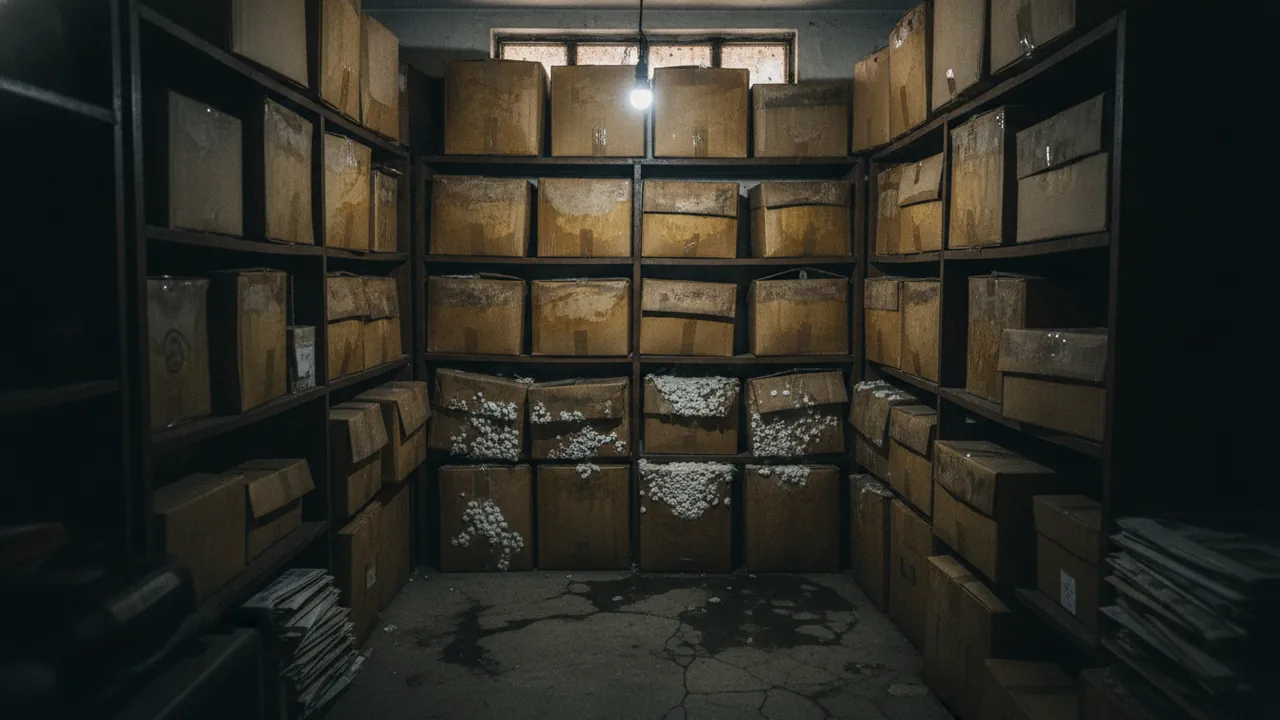
Every shopkeeper knows the sinking feeling. A customer brings back a pair of shoes that smell of mould. A box of stock is lifted off the top shelf and the bottom falls out. A season’s fabric comes out of the stockroom with grey spots along every fold.
None of it happened overnight. It happened slowly, in the dark, in a room nobody thought about.
How does damp air destroy stock?
Most of what a shop sells is made of materials that absorb moisture from the air: cardboard, paper, cotton, silk, leather, wood, and the fine metal contacts in electronics. In a stockroom that sits at 75–85% humidity, those materials take on water day after day — packaging weakens, labels lift, mildew grows, metal corrodes and dry foods clump. The damage is gradual and hidden, so it is usually discovered at the worst possible moment: in front of a customer.
What happens to each kind of stock
| Stock | What humidity does |
|---|---|
| Cardboard cartons | Absorb water, lose stacking strength, crush and collapse |
| Labels and barcodes | Curl, peel, smudge, stop scanning |
| Clothing and fabric | Mildew spots, musty smell, colour transfer |
| Shoes, bags, belts | White or green mould bloom on leather, sticky linings |
| Books and stationery | Warped covers, spotted pages, pages sticking together |
| Electronics and batteries | Corroded contacts, dead stock on arrival at the customer |
| Dry food, spices, tea | Clumping, loss of flavour, spoilage |
| Cosmetics and medicines | Damaged packaging, products outside storage conditions |
In a damp stockroom, inventory doesn’t just sit there. It slowly turns into write-offs.
Why are stockrooms so vulnerable to damp?
The shop floor gets the air-conditioning, the lights and the customers. The stockroom usually gets none of them. It is closed, dark, often ground-floor or basement, packed to the ceiling — and switched off at night. In Colombo’s monsoon months that room can sit above 80% humidity for weeks.
Front doors make it worse. A shop door that opens every few minutes lets in a steady stream of humid outdoor air.
What are the early signs of humidity damage to stock?
A musty smell, soft bottom-row cartons, curling labels, white spots on leather or dark fabric, returns for smell, and rust on shelving.
- A musty smell when you open the stockroom door
- Soft or bowed cartons on the bottom row
- Curled labels and tape that has stopped sticking
- White spots on leather or dark fabric
- Customer returns for smell or mould
- Rust on shelving brackets and fixtures
How do you protect shop stock from humidity?
Keep the stockroom below 60% humidity, get stock off floors and walls, rotate it, and run a dehumidifier with continuous drainage overnight.
- Measure overnight. Put a hygrometer in the stockroom and read it first thing in the morning — that’s the real number.
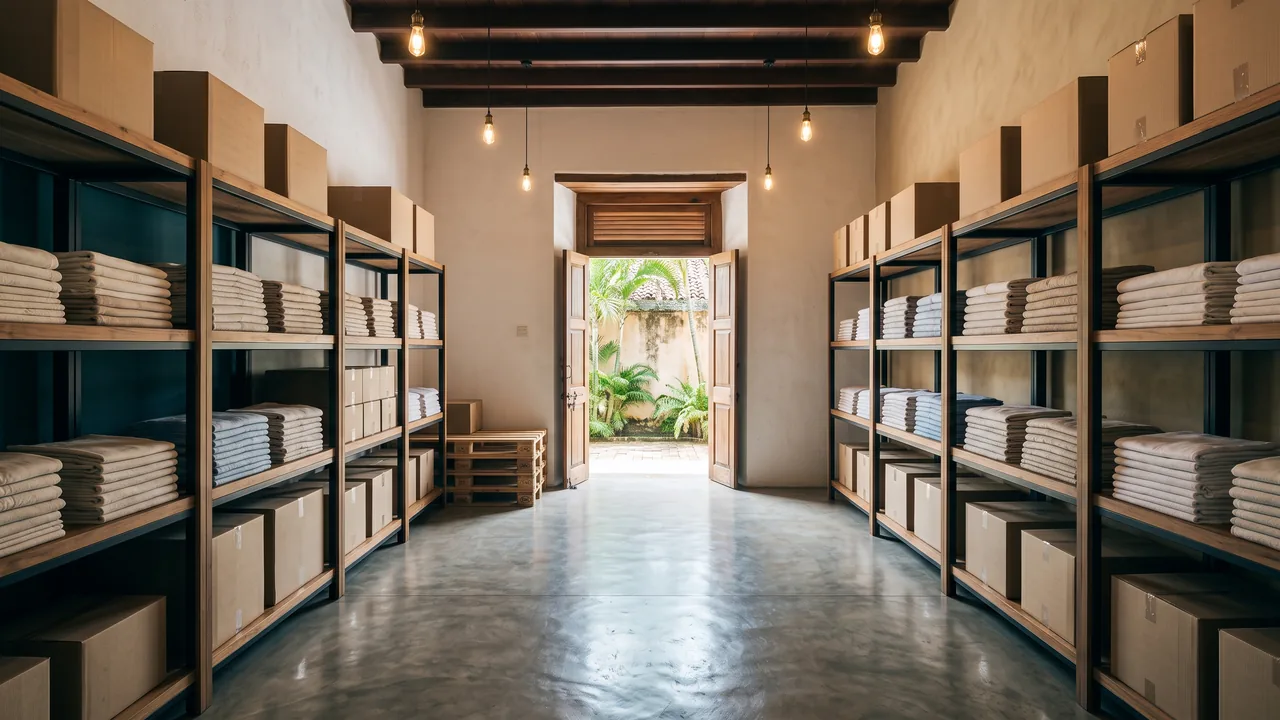
- Get stock off the floor and away from walls: pallets or the bottom shelf 15 cm up, a gap behind racking.
- Rotate stock so nothing sits untouched for months.
- Don’t seal damp in. Don’t shrink-wrap or bag goods that are already humid.
- Dry the stockroom continuously. A stockroom of up to about 80 m² suits a DA-35L; larger stores the DA-50L with a continuous-drain hose, so it runs all night without anyone emptying a tank.
- Keep the door shut between the shop floor and the stockroom.
DRYAir supplies showrooms, shops and stockrooms across Colombo — see their full range — and our own guide to humidity as a business cost runs through the numbers.
The bottom line
Stock doesn’t have to get wet to be ruined; it only has to sit in wet air. Measure the stockroom, keep it below 60%, and the losses you have been writing off as “wastage” start to disappear.
Questions readers ask
How does humidity damage retail stock?
High humidity softens cardboard packaging so cartons crush and collapse, makes labels curl and peel, causes mildew spots and musty smells on clothing, shoes and leather, corrodes electronics and metal parts, and makes dry foods clump or spoil. Damage builds slowly, so stock often looks fine until it is opened or moved.
What humidity should a shop stockroom be?
Keep a stockroom below about 60% relative humidity for most goods, and closer to 45–55% for clothing, leather, books, paper products and electronics. Measure it overnight and on holidays, when doors are shut and air conditioning is usually off.
Sources
- US Environmental Protection Agency — A Brief Guide to Mold, Moisture and Your Home
- International Organization for Standardization — ISO 9223: Corrosion of metals and alloys — Corrosivity of atmospheres
- Library of Congress — Collections Care: how to care for books, paper, photographs and textiles
Guidance from these bodies is general; figures for Sri Lanka come from our own reporting and DRYAir’s field experience.
Published . Spotted an error? Tell the desk.