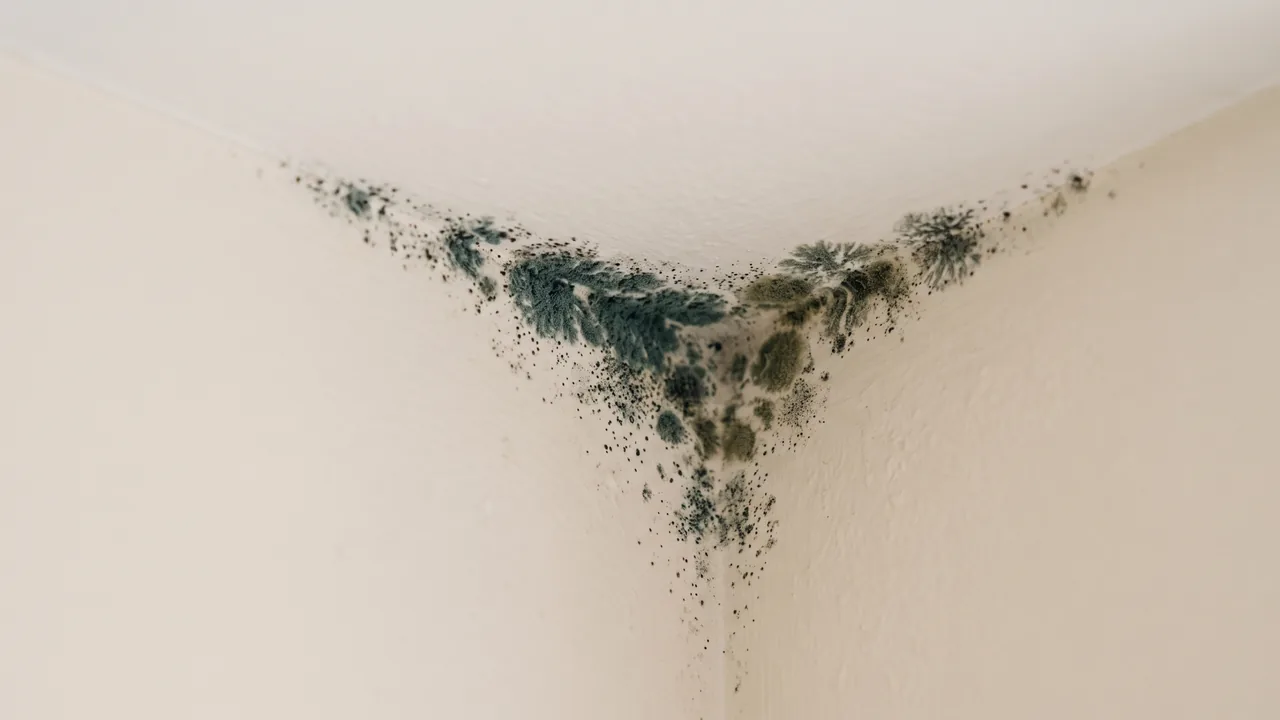
Every Sri Lankan home has a mould story. The black freckles creeping along the bathroom ceiling. The green bloom on the back of the almirah that nobody noticed until the saree inside smelled wrong. The leather handbag that came out of the cupboard wearing a grey fur coat after the monsoon.
And almost every mould story has the same second chapter: it was cleaned, it came back.
That is not bad luck, and it is not bad cleaning. It is biology. Mould spores are in the air everywhere, all the time, indoors and out. They are not the problem. The problem is what they land on — and in a Sri Lankan home during the rains, what they land on is almost always damp enough to grow.
What does mould need to grow?
Mould needs three things: moisture, something to eat, and time. Food is everywhere — dust, paint, plaster, wood, cotton, leather, paper and the soap film on bathroom grout all qualify. Time is on its side in a climate that stays warm all year. That leaves moisture as the only lever a household can really pull.
The moisture does not have to be a leak or a puddle. When the air in a room stays humid for days, surfaces absorb water from it. Cool surfaces — an outside wall at night, the wall behind an air conditioner, the back of a wardrobe pushed against masonry — get even wetter, because humid air condenses on them. Building scientists generally treat surface humidity of about 70% sustained over time as the danger zone, and public-health guidance, including from the US EPA, recommends keeping indoor humidity below 60%.
Mould spores are not the problem. They are everywhere. The problem is what they land on.
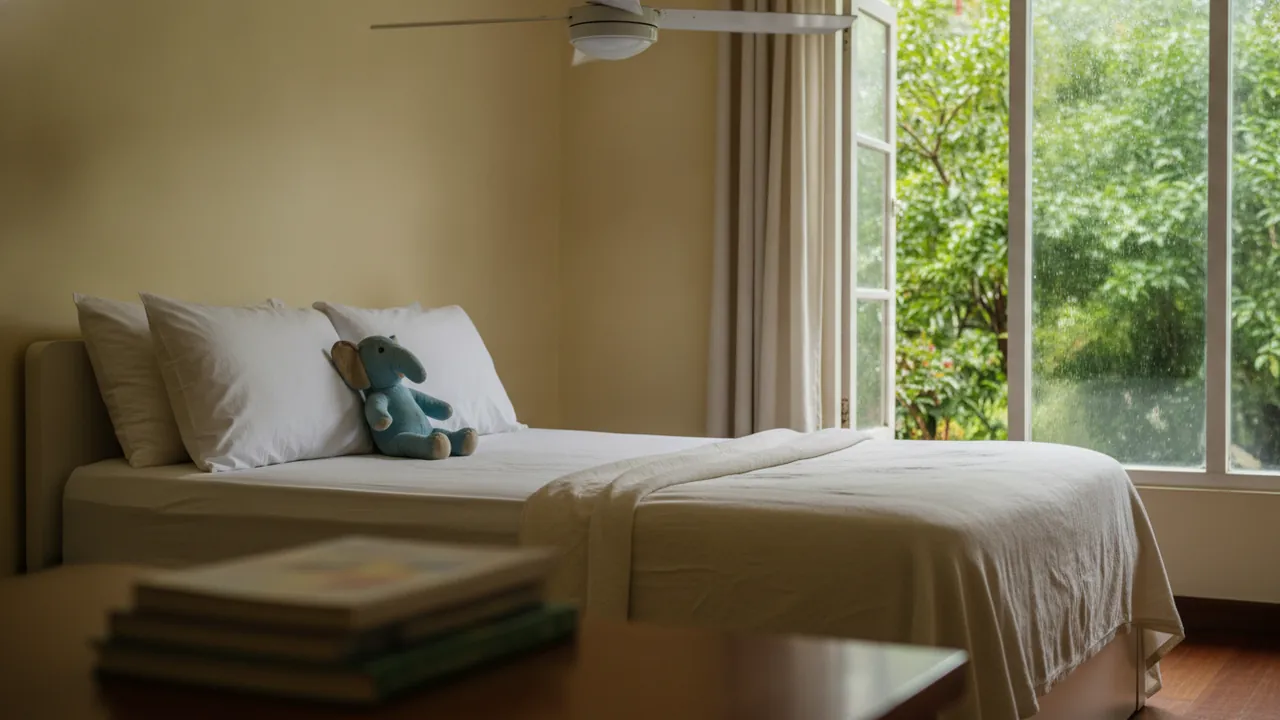
In most of the wet zone, an unconditioned bedroom sits at 70–90% for much of the year. That is mould weather, indoors.
Where does mould hide in a Sri Lankan house?
Look in the places where air does not move and surfaces stay cool or wet:
- Behind and inside wardrobes and almirahs, especially against outside walls.
- Bathroom ceilings and grout, where hot showers dump moisture into a small room.
- Under beds and behind sofas, where air is still.
- Around AC units and on the walls they chill.
- Window frames and curtains, where night-time condensation collects.
- Mattresses, pillows and upholstery that absorb sweat and humidity.
- Shoes, bags, belts and leather jackets stored in closed cupboards.
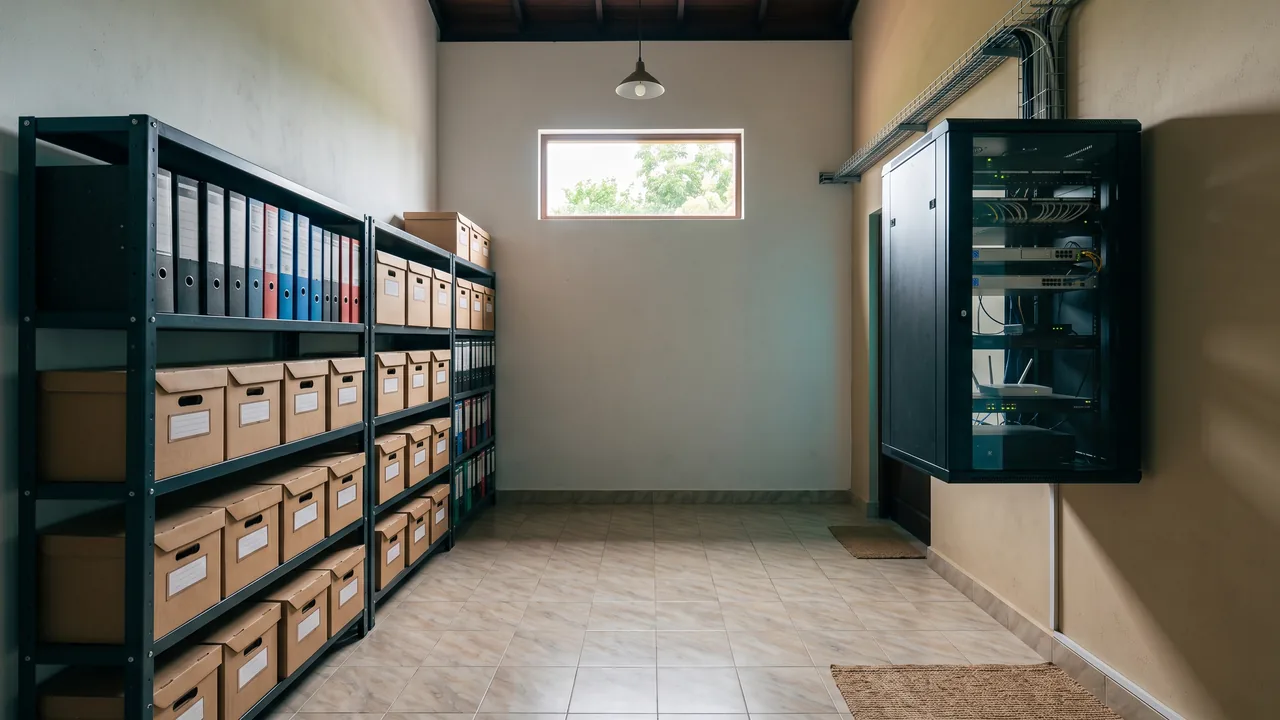
- Books, photo albums and certificates on shelves against outside walls.
Is mould bad for your health?
Yes, for some people more than others. The World Health Organization’s guidelines on dampness and mould conclude that people living in damp, mouldy buildings have more coughing, wheezing and asthma, and more respiratory infections. Mould releases spores and fragments that are allergens and irritants; it also produces the volatile compounds behind that unmistakable musty smell.
Children, older people, anyone with asthma or allergies and anyone with a weakened immune system are most at risk. The colour of the mould tells you nothing reliable about how harmful it is — “black mould” is a description, not a diagnosis. The sensible rule is simple: no visible mould should be tolerated indoors.
A dehumidifier is not a treatment for any illness. But removing the damp that mould depends on removes one of the most common indoor triggers, and many families notice the difference in the bedroom first.
How do you get rid of mould for good?
Think of it as two jobs: remove what is there, then remove the conditions.
Step 1 — Clean it properly
- Open windows if it is dry outside, and wear gloves and a mask.
- On hard surfaces, scrub with detergent and water or a purpose-made mould cleaner.
- Dry the surface completely — a fan or a dehumidifier running in the closed room speeds this up.
- Throw away porous items that are heavily mouldy and cannot be cleaned: old mattresses, carpets, ceiling boards, cardboard.
- Wash fabrics hot and dry them fully — ideally in sun, or indoors with a dehumidifier, never damp in a cupboard.
Step 2 — Take the air below 60%
This is the step most people skip, and the reason the mould returns. Buy a hygrometer and measure the room. If it reads above 60%, the spores in the air will find the same wall again.
- Run a dehumidifier in affected rooms, set to 50%. It will pull the air — and, over days, the walls and furniture — down to a level where mould cannot establish itself.
- Leave a gap of a few centimetres between furniture and outside walls so air can circulate.
- Use extractor fans in bathrooms and kitchens, and keep bathroom doors closed while showering.
- Stop drying clothes indoors without a dehumidifier running in the same room.
- Fix leaks, blocked gutters and rising damp — no dehumidifier can keep up with water pouring in.
The bottom line
Mould is a moisture problem wearing a hygiene disguise. Scrubbing, bleaching and repainting treat the symptom; drying the air treats the cause. Hold your rooms at 45–55% relative humidity and mould has nothing to come back to.
Not sure which dehumidifier fits the room? Our sizing guide walks through it, and the room sizer does the maths for you.
Questions readers ask
Why does mould come back after I clean it?
Cleaning removes visible mould but not the damp conditions or the microscopic spores that are always in the air. If the wall or fabric stays above about 60–70% relative humidity, spores land and grow again within weeks. Lowering room humidity to 45–55% is what stops the cycle.
Is black mould on walls dangerous?
Any indoor mould can trigger coughing, sneezing, itchy eyes and asthma attacks, especially in children, older people and anyone with allergies or weak immunity. The colour does not tell you how harmful a mould is. Treat all visible mould as something to remove and prevent, not to live with.
Does bleach kill mould on walls?
Bleach can lighten stains on hard, non-porous surfaces such as tiles, but on porous surfaces like plaster, wood and fabric it often fails to reach the roots and adds more moisture. Use a detergent or a purpose-made mould cleaner, dry the surface fully, and then control humidity so it cannot regrow.
Published . Spotted an error? Tell the desk.