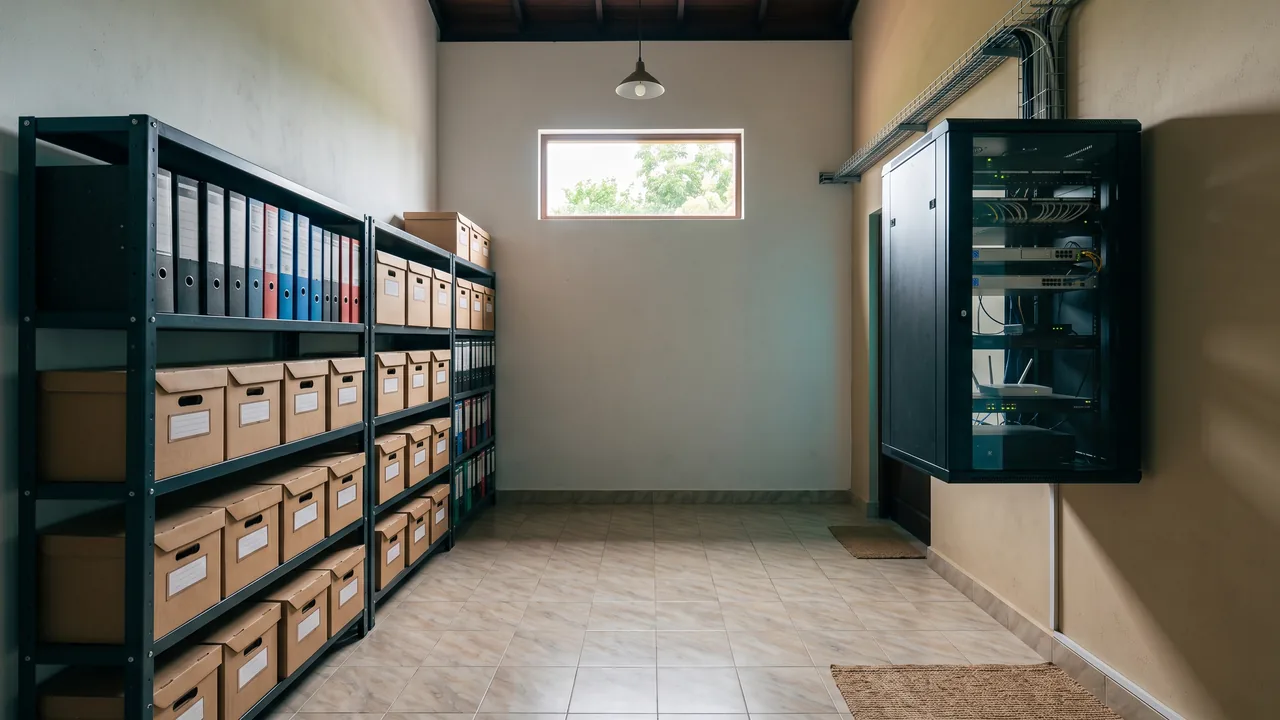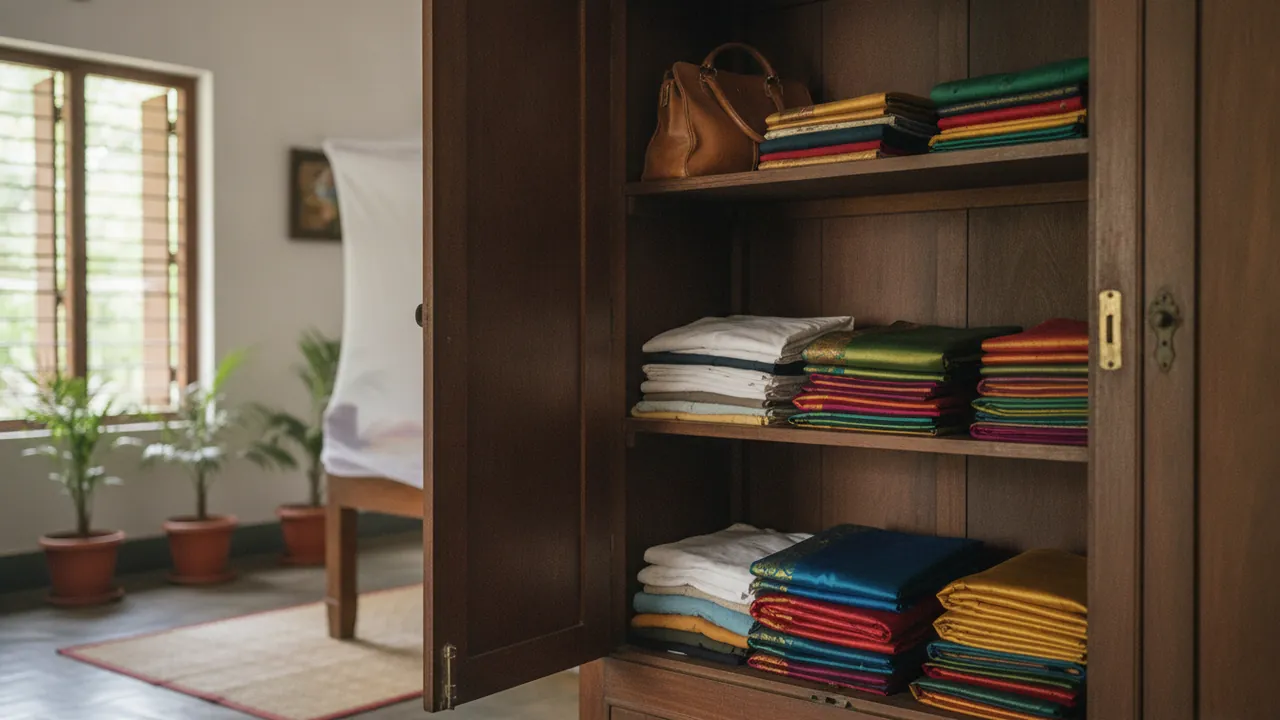
Every family on the island has a drawer that smells like the monsoon. Open it and there is the wedding saree, the school certificates, the photographs of grandparents, the good leather bag that only comes out for funerals and weddings. And every family eventually opens that drawer to find the damp got there first.
These are the things we store for years and look at rarely — which is exactly why humidity gets the better of them.
Why do clothes, books and leather go mouldy?
Fabric, paper and leather are hygroscopic: they soak up moisture from the air around them. When the air stays above about 60–65% relative humidity, they hold enough water for mildew — a mould that grows on organic surfaces — to take hold. Closed cupboards make it worse: the air inside barely moves, and when a wardrobe stands against an outside wall that cools at night, its back panel can be damper still.
What it looks like:
- Clothes and sarees: grey or black speckles, brown or yellow spots, a sour or musty smell that survives washing. Silk and cotton suffer most.
- Books and papers: rust-coloured “foxing” spots, wavy pages, covers that warp, pages that stick together, and silverfish.
- Photographs: prints and albums sticking together, spots and bloom on the image surface.
- Leather: a white or green bloom, stiffness and cracking, sticky linings.
- Wood: doors and drawers that swell and stick, veneers that lift.
The things we look at least often are the things the damp finds first.
How do museums do it?
Libraries, archives and museums control humidity carefully because paper, textiles and leather are so sensitive to it. Many aim to keep collections at a steady level in the region of 45–55% — dry enough to stop mould and insects, not so dry that materials become brittle. You don’t need a museum’s budget to borrow the idea: pick one room or cupboard for the things that matter, and keep it at 45–55%.
A storage plan for Sri Lankan homes
Wardrobes and almirahs
- Store only clean, fully dry clothes. Sweat and food traces feed mildew; a “nearly dry” shirt is a damp shirt.
- Give clothes space. Crammed rails trap moist air; leave gaps between hangers.
- Pull the wardrobe off the wall — a few centimetres is enough — and never block its base.
- Open the doors daily, or better, run a dehumidifier in the room with the doors ajar for an hour.
- Use breathable garment bags — cotton or muslin — for special pieces. Plastic dry-cleaning covers trap moisture.
Sarees and silk
- Wrap in clean, unbleached cotton or muslin cloth; avoid storing in plastic bags.
- Refold along different lines every few months so creases don’t weaken the fibres.
- Air them occasionally on a dry, bright day — in the shade, since direct sun fades colour.
Leather
- Clean and condition before storing; stuff bags and shoes with acid-free paper.
- Store in cotton dust bags on open shelves — never airtight boxes or plastic.
- Check monthly in the rainy season. If a bloom appears, brush it off outdoors with a dry cloth, let the item air, and dry the room.
Books, documents and photographs
- Keep shelves off outside walls, with a finger-width gap behind the books.
- Avoid ground-floor cupboards and anywhere near bathrooms.
- Put certificates, deeds and photos in acid-free sleeves and boxes, and keep a scanned copy.
Rescuing things that have already gone mouldy
- Take them outside before brushing off mould, so spores don’t spread through the house.
- Wash washable fabrics hot if the fibre allows, and dry completely.
- For valuable sarees, silks, books or photographs, talk to a specialist dry cleaner or a conservator before experimenting.
- Then fix the room: without drier air, it will happen again.
The bottom line
Heirlooms don’t need special treatment — they need dry air, clean storage and room to breathe. Choose one room or cupboard for the things you can’t replace, keep it at 45–55% humidity, and next monsoon that drawer will smell of nothing at all.
Questions readers ask
How do I stop my clothes smelling musty in the wardrobe?
The musty smell comes from mildew growing in damp fabric. Store clothes only when fully dry, leave space between hangers, keep the wardrobe a few centimetres off outside walls, open it daily, and run a dehumidifier in the room to keep humidity at 45–55%. Wash affected clothes and dry them in sun or a dehumidified room.
How do I store leather bags and shoes in humid weather?
Clean and condition leather, stuff bags and shoes with acid-free paper, and store them in breathable cotton dust bags on an open shelf rather than in plastic or a sealed box. Keep the room below 60% humidity. Check them monthly during the monsoon and wipe off any early mould with a dry cloth outdoors.
How do I protect books and old photographs from humidity?
Keep books on shelves away from outside walls with a small air gap behind them, and avoid basements and ground-floor cupboards. Store photographs and documents in acid-free sleeves and boxes. Aim for a steady 40–50% humidity; a dehumidified room is far better than moisture-absorbing packets for a whole bookcase.
Published . Spotted an error? Tell the desk.