On Tuesday morning, housekeeping finishes the room. Fresh sheets, folded towels, curtains drawn against the sun, AC switched off to save power until the next booking on Friday.
On Friday afternoon, the guest opens the door, wheels in the suitcase, and breathes in.
What happened in between is the story of almost every “room smelled damp” review in Sri Lanka.
What really happens inside a closed room?
Within a day or two of the door closing and the AC going off, the room’s air settles at the humidity of the outdoor air — commonly 80% or more in coastal and hill-country Sri Lanka. Carpets, curtains, mattresses, pillows and upholstery absorb that moisture, and mould and bacteria that were dormant start to grow. They release the musty compounds a guest smells instantly. Each closed day makes it worse, and the smell soaks into the fabrics themselves.
Day by day
- Day 1: The room cools and the humidity rises towards the outdoor level. Nothing is visible.
- Day 2: Fabrics and the mattress have absorbed moisture. The air smells a little stale.
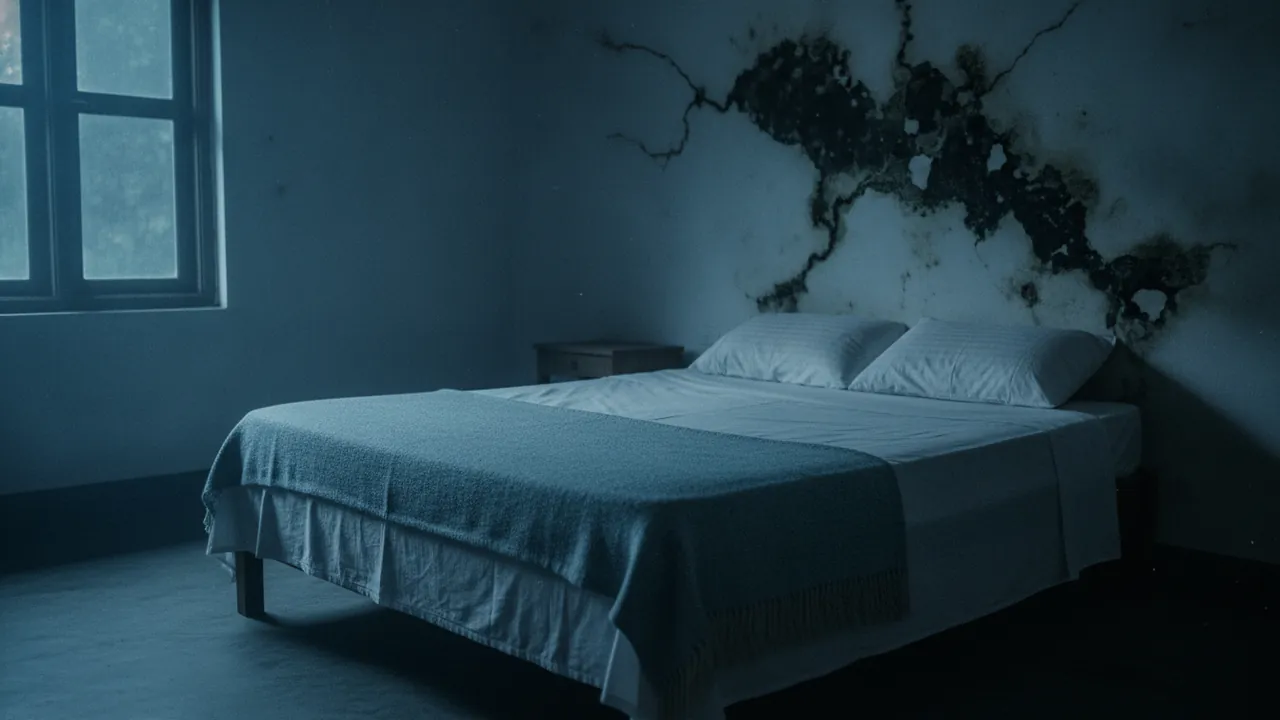
- Day 3 and beyond: Microbial growth is under way in carpets, curtain hems, wardrobe interiors and the AC unit. The smell is noticeable from the doorway. Mould spots appear on leather furniture, wardrobe backs and window frames.
- Weeks (low season): Visible mould, damp patches on carpet under the AC, sticky or stained bedding, rust on fittings. Now it’s a refurbishment, not a clean.
Guests forgive a slow check-in. They don’t forgive a room that smells like the inside of a wet shoe.
Where does mould hide in a hotel room?
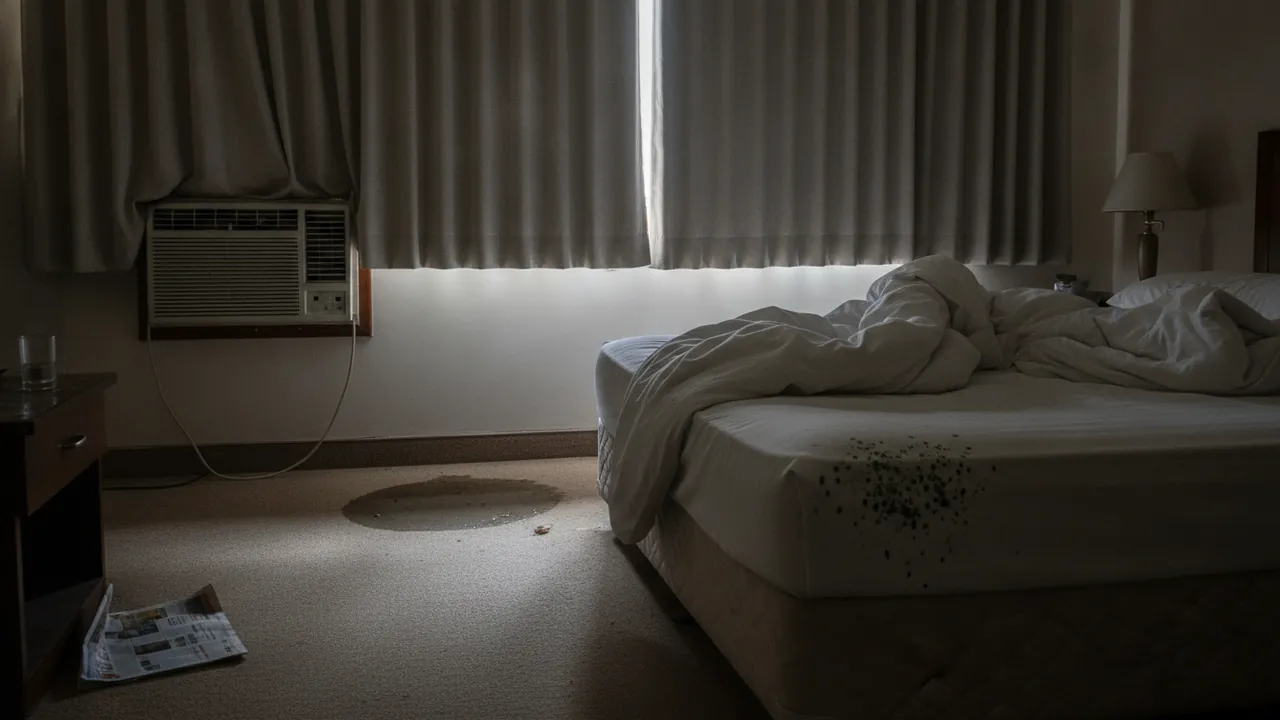
In the AC unit, the carpet beneath it, curtain hems, wardrobes, mattresses and pillows, and bathrooms with no extraction.
- The AC unit — a dirty drip tray or coil grows mould and blows it into the room when the guest switches it on.
- Carpet under and around the AC, where condensation drips.
- Curtain hems resting on cool window frames.
- Inside wardrobes and drawers, especially on outside walls.
- Mattresses and pillows that never fully dry between guests.
- Bathrooms with no extract running while the room is empty.
What does a musty room cost a hotel?
Every musty room is a review risk — and online reviews are where future guests decide. Beyond that: linen rewashed or replaced, carpets and curtains replaced sooner, mattresses discarded, leather furniture ruined, and rooms taken out of inventory for refurbishment. It is one of the most expensive problems in hospitality, and one of the cheapest to prevent.
How do hotels keep empty rooms fresh?
Keep closed rooms at 50–55% humidity with a dehumidifier, switch it on before arrival, service the AC on a schedule, keep the linen store dry, and inspect weekly in the monsoon.
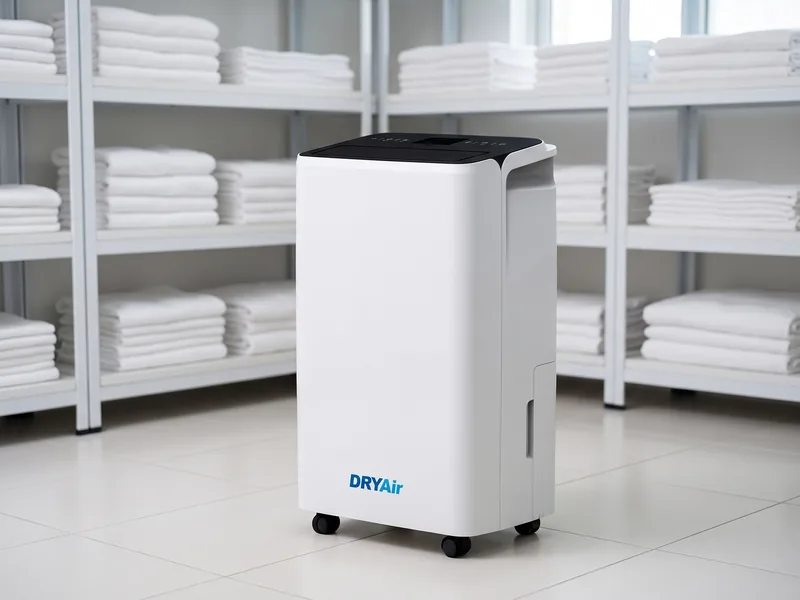
- Never let empty rooms go unconditioned for long. Run a dehumidifier set to 50–55% in rooms that are closed between stays. It uses far less energy than cooling an empty room, and the room is fresh when the guest arrives. DRYAir’s DA-20L suits rooms and suites up to about 50 m².
- Switch on before arrival. For a room that has been closed, run the dehumidifier a few hours before check-in.
- Service the AC — drip trays, coils and filters — on a schedule, not on complaint.
- Keep the linen store dry, at 45–55%, so fresh sheets don’t arrive already damp. (How hotels lose reviews to humidity.)
- Inspect weekly in the monsoon: wardrobe backs, curtain hems, under the bed, carpet under the AC.
- Treat any mould properly — clean and dry hard surfaces, replace porous items that can’t be cleaned — and then fix the humidity, or it returns.
DRYAir counts hotels among its clients, including Cinnamon Life and Suite Lanka Hotel. Its protection blueprint and full range are worth a look for any property manager.
The bottom line
A closed hotel room is never really empty. Without humidity control, it fills with moisture, then with mould, then with a smell your next guest will remember. Keep empty rooms dry, and the only thing waiting for your guests is the view.
Questions readers ask
Why do closed hotel rooms smell musty?
With the door shut and the air conditioning off, a room quickly reaches the outdoor humidity, which in Sri Lanka is often above 80%. Soft furnishings absorb that moisture, and mould and bacteria growing in them release musty-smelling compounds. The longer the room stays closed, the stronger the smell and the more it soaks into fabrics.
How do hotels prevent mould in unoccupied rooms?
Keep humidity controlled while rooms are empty, typically 50–55% with a dehumidifier or the room’s humidity control, with doors and windows closed. Inspect wardrobes, curtains, mattresses and AC units regularly during the monsoon, clean AC drip trays and filters, and air rooms only on dry, sunny days.
Sources
- World Health Organization — WHO guidelines for indoor air quality: dampness and mould (2009)
- US Environmental Protection Agency — A Brief Guide to Mold, Moisture and Your Home
- US Environmental Protection Agency — Mold Cleanup in Your Home
Guidance from these bodies is general; figures for Sri Lanka come from our own reporting and DRYAir’s field experience.
Published . Spotted an error? Tell the desk.