You have probably never seen the wall behind your almirah. Most people haven’t. It was pushed into place on the day it arrived, filled with clothes, and it has not moved since.
Tonight might be a good night to change that.
Why is the back of the wardrobe the worst place in the house?
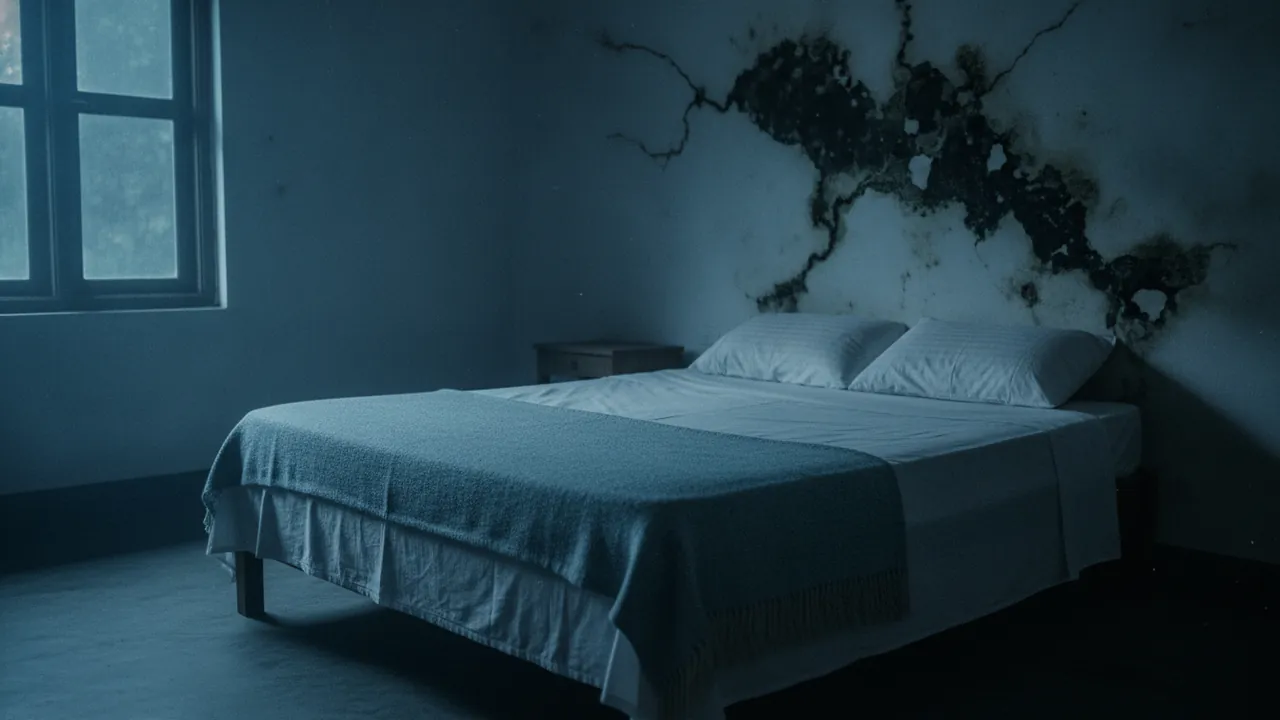
Because it combines everything mould needs and removes everything that stops it. An outside wall cools at night and collects condensation; the narrow gap behind the wardrobe has almost no airflow; no light reaches it; and the wooden or board back of the wardrobe is food. In a Sri Lankan bedroom sitting at 70–85% humidity, that hidden strip of wall can stay damp for months without anyone noticing.
The colony grows in the dark, spreads up the wall and onto the back panel of the wardrobe — and from there into the clothes inside.
The first sign is almost never the mould itself. It is the shirt that smells strange the moment you take it off the hanger.
How do you know there is mould behind your wardrobe?
Musty-smelling clothes are usually the first sign, followed by fuzz on leather, spots on the back panel, sticking doors and a cold, damp wall beside the wardrobe.
- Clothes, bags and shoes smell musty, even after washing.
- White or green fuzz on leather belts, bags and shoes stored inside.
- Brown or black spots on the inside back panel or the bottom shelf.
- Doors that stick or a back panel that has bowed or softened.
- A cold, damp feel to the wall beside the wardrobe at dawn.
- Allergy symptoms worse in the bedroom, especially at night. (Why bedroom mould matters most.)
How do you check behind a wardrobe safely?
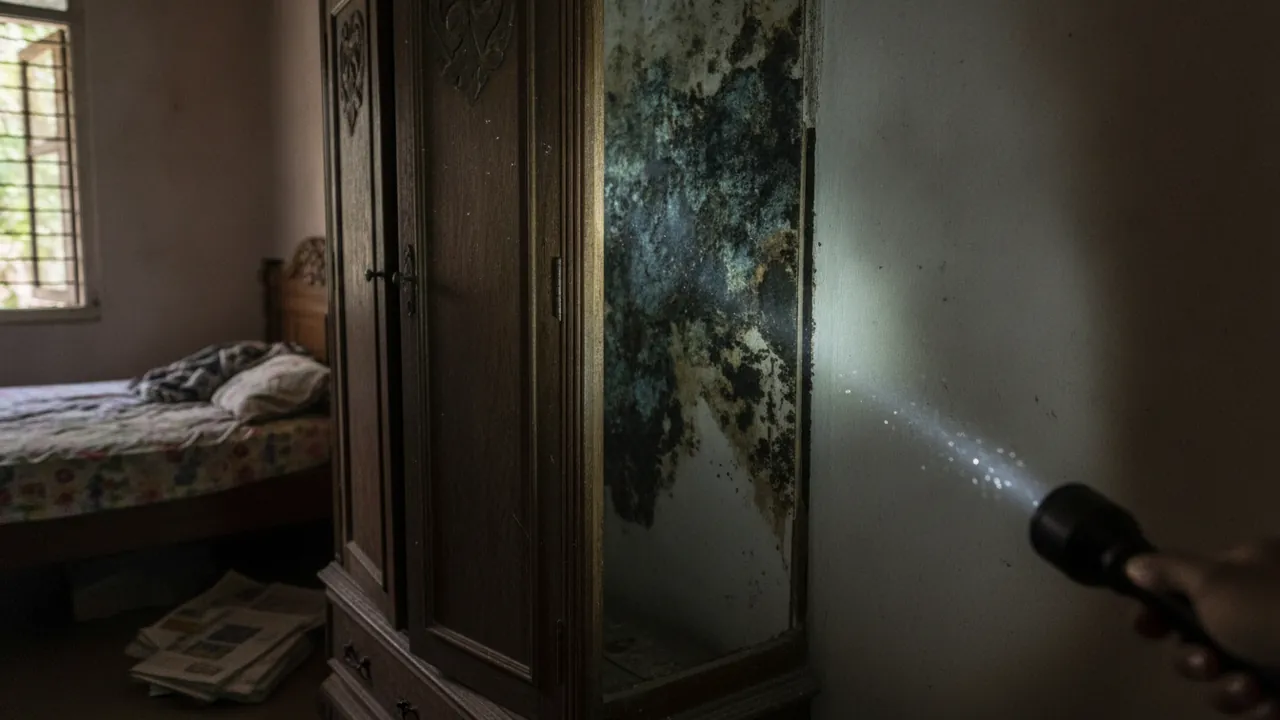
With help, a torch, a mask and gloves — and without brushing dry mould into the air.
- Empty the bottom shelf and slide the wardrobe forward. Get help; old almirahs are heavy.
- Look with a torch along the wall, the skirting and the wardrobe back.
- Wear a mask and gloves before touching anything, and keep children out of the room.
- Don’t brush dry mould — that sends spores into the air. Mist it lightly with water first.
Cleaning it properly
- Hard surfaces (painted walls, tiles, the wardrobe’s laminate): scrub with detergent and water, then dry completely. US EPA guidance is to clean and dry hard surfaces and discard porous materials that cannot be cleaned.
- Plaster that is crumbling or stained right through may need scraping back and replastering — once it is dry.
- The wardrobe back: clean, dry in the sun if you can, or replace a soft, stained board.
- Clothes: wash hot if the fabric allows and dry completely. Take silk, wool and leather to a specialist. (Saving sarees, books and leather from damp.)
How do you stop mould coming back behind furniture?
Cleaning without changing the conditions buys you a few weeks. To stop it for good:
- Leave a 5 cm gap between the wardrobe and the wall, and keep the base clear.
- Move wardrobes to inside walls where you can.
- Open the doors for an hour a day so air reaches the clothes.
- Never hang anything damp.
- Dry the room. This is what actually stops it: a dehumidifier set to 50%, running in the room with the wardrobe doors open for part of the day. DRYAir’s DA-12LC suits most bedrooms; their guide to that musty smell in the house explains what the odour actually is.
The bottom line
The most common hidden mould colony in a Sri Lankan home is the one you never see, because you never move the furniture. Look tonight, clean it properly, and change the conditions — gap, airflow and dry air — so there is nothing for it to come back to.
Questions readers ask
Why does mould grow behind wardrobes?
A wardrobe pushed against an outside wall traps a thin layer of still air against a surface that cools at night. Humid air condenses on that cool wall, there is no airflow or sunlight to dry it, and the wardrobe back gives mould something to feed on. In Sri Lanka’s humidity, that hidden space can stay damp for months.
How far should a wardrobe be from the wall?
Leave at least 5 centimetres between a wardrobe or bookcase and an outside wall so air can move behind it, and keep the base clear so air flows underneath. Combine the gap with keeping the room at 45–55% humidity, because a gap alone cannot dry very humid air.
Sources
- US Environmental Protection Agency — A Brief Guide to Mold, Moisture and Your Home
- US Environmental Protection Agency — Mold Cleanup in Your Home
- World Health Organization — WHO guidelines for indoor air quality: dampness and mould (2009)
- NHS (UK National Health Service) — Can damp and mould affect my health?
Guidance from these bodies is general; figures for Sri Lanka come from our own reporting and DRYAir’s field experience.
Published . Spotted an error? Tell the desk.