There is no dramatic moment. No burst pipe, no flood water at the door. The damage in most Sri Lankan homes happens in total silence, at about three in the morning, while everyone is asleep.
That is when the walls are coolest. And that is when the water hanging in the air — the water nobody can see — quietly moves into them.
How does humid air damage a building with no leak?
Building materials are thirsty. Plaster, brick, timber, paint, fabric and paper all absorb water vapour from the air around them, and when a wall cools below the air’s dew point at night, water condenses directly onto it. In a climate where outdoor humidity sits at 70–90% for most of the year, that cycle repeats every single night. Each night adds a little more water than the day can remove.
You do not see it happening. You see the results, weeks or months later:
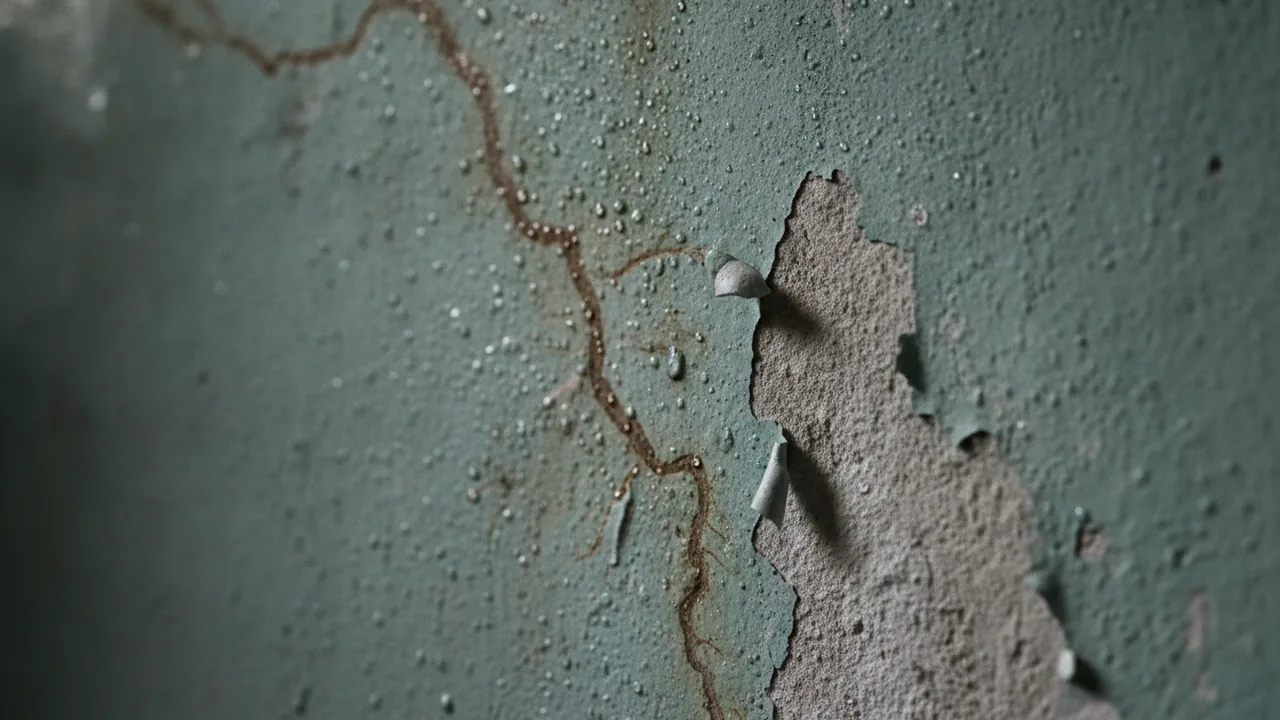
- Paint that bubbles, blisters and peels — pushed off the wall by moisture in the plaster behind it.
- Plaster that turns powdery and crumbles at the touch, especially low on walls and around windows.
- Doors and drawers that swell and stick every monsoon.
- Rust blooming on window grilles, gate hinges, nails and screws.
- Mould in corners, behind furniture and around air-conditioners.
- A smell — faint at first, then always there.
The worst damage in a Sri Lankan home rarely arrives through the roof. It arrives through the air, one night at a time.
Why does the damage happen at night?
Warm air holds more water than cool air. During the day a Colombo room might sit at 30 °C and 75% humidity. At night the air and the walls cool — and the walls cool faster, especially outside walls and any wall chilled by an air-conditioner. When a surface drops below the dew point of the air touching it, the air can no longer hold all its water, and the excess turns to liquid on that surface.
That is why damage clusters in predictable places: outside walls, corners, the wall behind a wardrobe, the wall behind an AC unit, the underside of a concrete slab. How the dew point works, in plain language.
Why do coastal homes rust and rot faster?
Near the coast — Colombo, Negombo, Moratuwa, Galle, Hambantota, Trincomalee — the air carries salt. Salt is hygroscopic: it pulls even more water out of the air and holds it against metal and masonry. International corrosion standards such as ISO 9223 class coastal, humid environments among the most aggressive for steel. If your gate rusts faster than your cousin’s in Kandy, that is why.
What are the early warning signs of humidity damage?
Cool, damp walls at dawn, a musty smell behind furniture, powdery plaster low on walls, doors that stick in the rainy months, and bedroom humidity above 65% in the morning. Here is how to check this week:
- Run a hand along an outside wall at dawn. If it feels cool and slightly damp, condensation is happening.
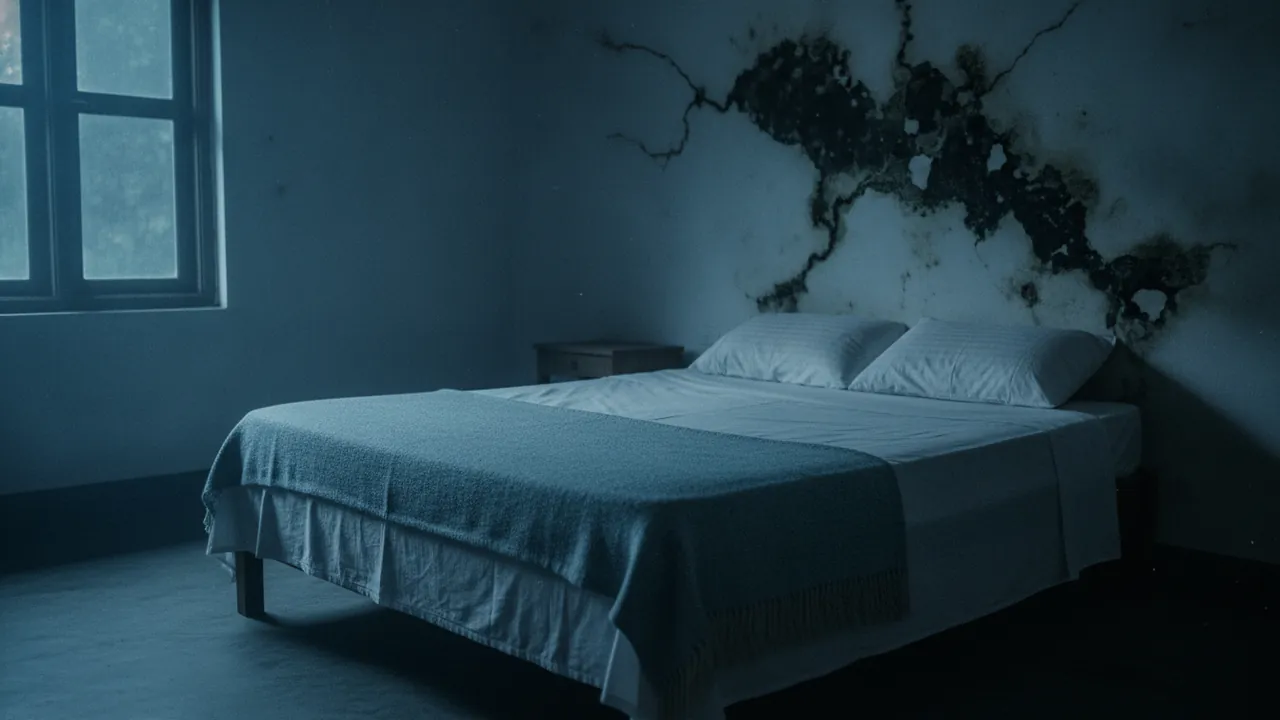
- Check behind the biggest piece of furniture on an outside wall. Dark spots or a musty smell mean the wall has been wet for a while. (What you may find behind the wardrobe.)
- Look at the bottom metre of ground-floor walls for powdery plaster or tide-marks.
- Open a door that sticks only in the rainy months. Swelling timber is a humidity gauge.
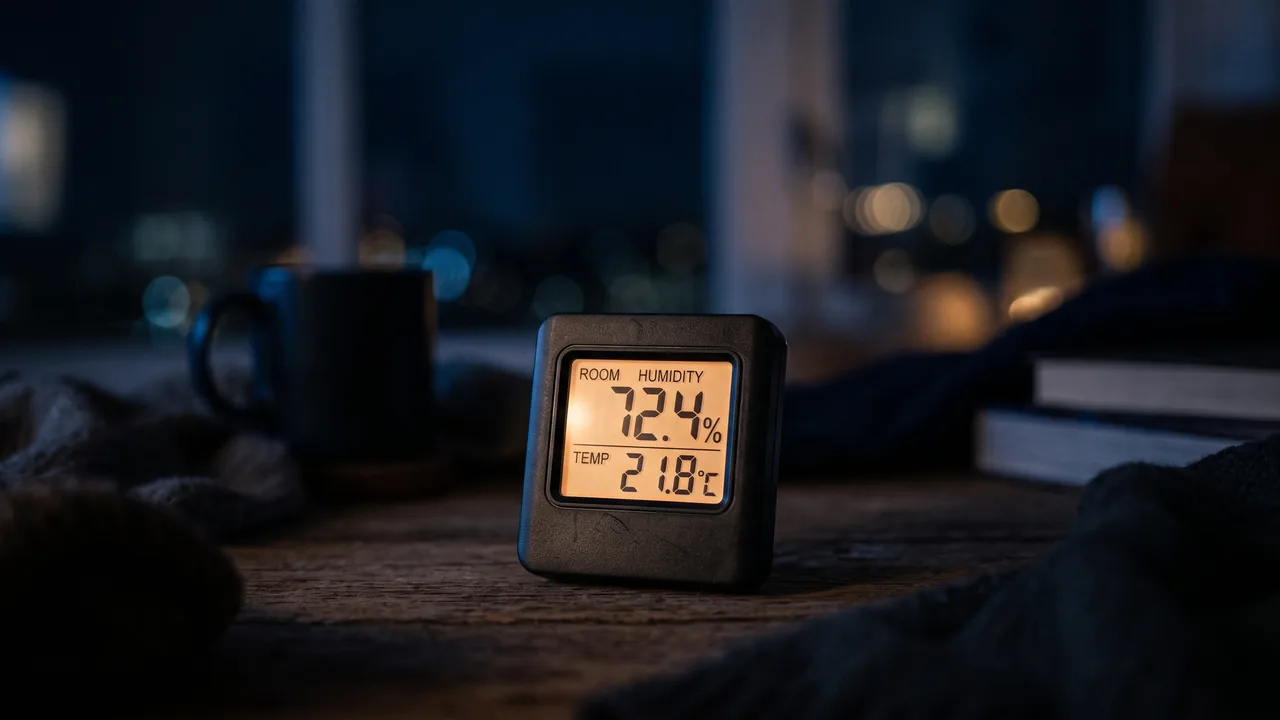
- Put a hygrometer in the bedroom overnight. Above 65% in the morning, you have found the cause.
How do you stop humid air damaging your walls?
Painting over the damage treats the symptom. Fixing it means taking the water out of the air so the walls can dry and stay dry:
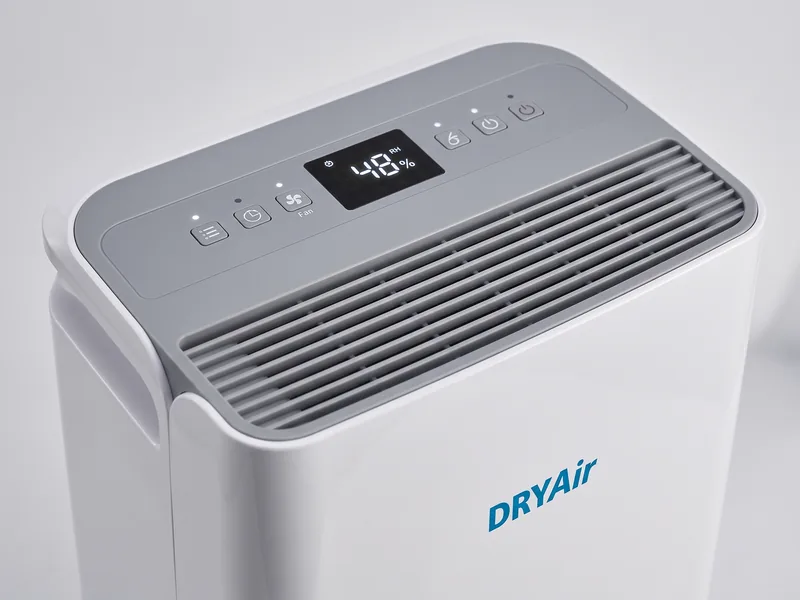
- Hold rooms at 45–55% humidity. A correctly sized dehumidifier does this automatically. DRYAir’s DA-20L covers a typical living room or apartment up to about 50 m²; the smaller DA-12LC suits a bedroom.
- Pull furniture 5 cm off outside walls so air can circulate.
- Fix real water sources — gutters, downpipes, roof flashing, plumbing. A dehumidifier cannot outrun a leak.
- Ventilate only with dry air — sunny afternoons, not rainy evenings.
- Then repair and repaint — once the wall has dried out, not before.
DRYAir’s protection blueprint sets out the five fronts of humidity damage — health, structure, stock, electronics and comfort — if you want the bigger picture.
The bottom line
Your house is not just sitting in humid air; it is soaking it up. Every night the walls take on a little more water, and every year the repair bill grows. Measure the humidity, bring it down to 45–55%, and the slow damage stops where it is.
Questions readers ask
Can humidity damage a house without a leak?
Yes. In Sri Lanka’s 70–90% humidity, plaster, timber, paint and fabric absorb moisture directly from the air, and cool walls collect condensation at night. Over months that causes bubbling and peeling paint, crumbling plaster, swollen doors, rust and mould — with no leak anywhere.
Why does paint bubble and peel on inside walls?
Moisture trapped in the plaster behind the paint pushes it away from the wall. In humid climates that moisture often comes from the air itself condensing on cool walls at night, not from a pipe or roof leak. Repainting without drying the wall and the room usually fails within months.
Sources
- World Health Organization — WHO Housing and health guidelines (2018)
- US Environmental Protection Agency — A Brief Guide to Mold, Moisture and Your Home
- International Organization for Standardization — ISO 9223: Corrosion of metals and alloys — Corrosivity of atmospheres
- Department of Meteorology, Sri Lanka — Climate and weather information for Sri Lanka
Guidance from these bodies is general; figures for Sri Lanka come from our own reporting and DRYAir’s field experience.
Published . Spotted an error? Tell the desk.