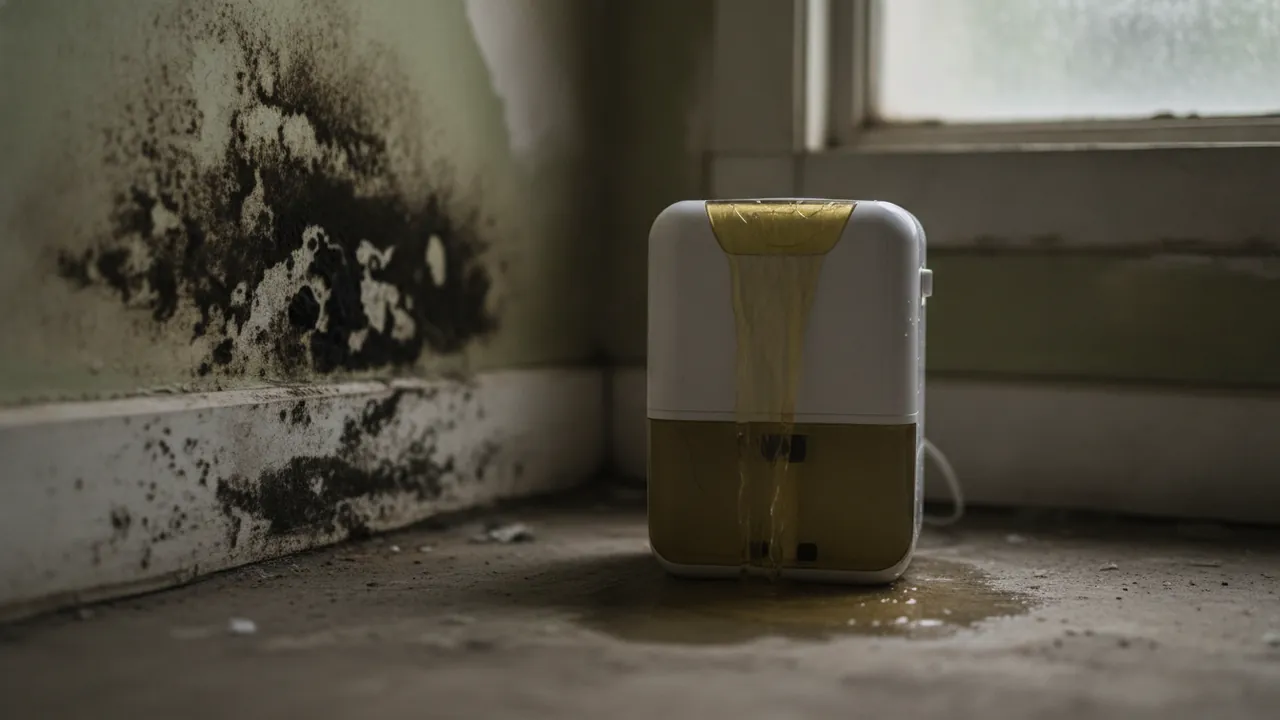
It is one of the most common complaints about a new dehumidifier: it runs all day, the tank fills, and the bedroom still smells. More often than not, the machine is standing in the corridor — and the bedroom door is open for the breeze.
A dehumidifier can only dry the air it can reach. Where you put it — and what you leave open — decides whether it wins.
Where is the best place to put a dehumidifier?
In the room you want to dry, with the doors and windows of that room closed, standing on a level floor with clear space around it. Put it close to the problem — the damp wall, the wardrobe, the store shelves — but not jammed against it or buried behind furniture and curtains. ENERGY STAR’s guidance adds that units without top-mounted air discharge should stand away from walls and furniture, so air circulates freely, and that dehumidifiers should be kept away from dust sources and drain hoses away from electrical cords.
A dehumidifier in the corridor is drying the corridor. Put it where the problem is.
What are the most common dehumidifier placement mistakes?
- Running it with the door or window open. It ends up trying to dry the whole house — or the monsoon. Close the room.
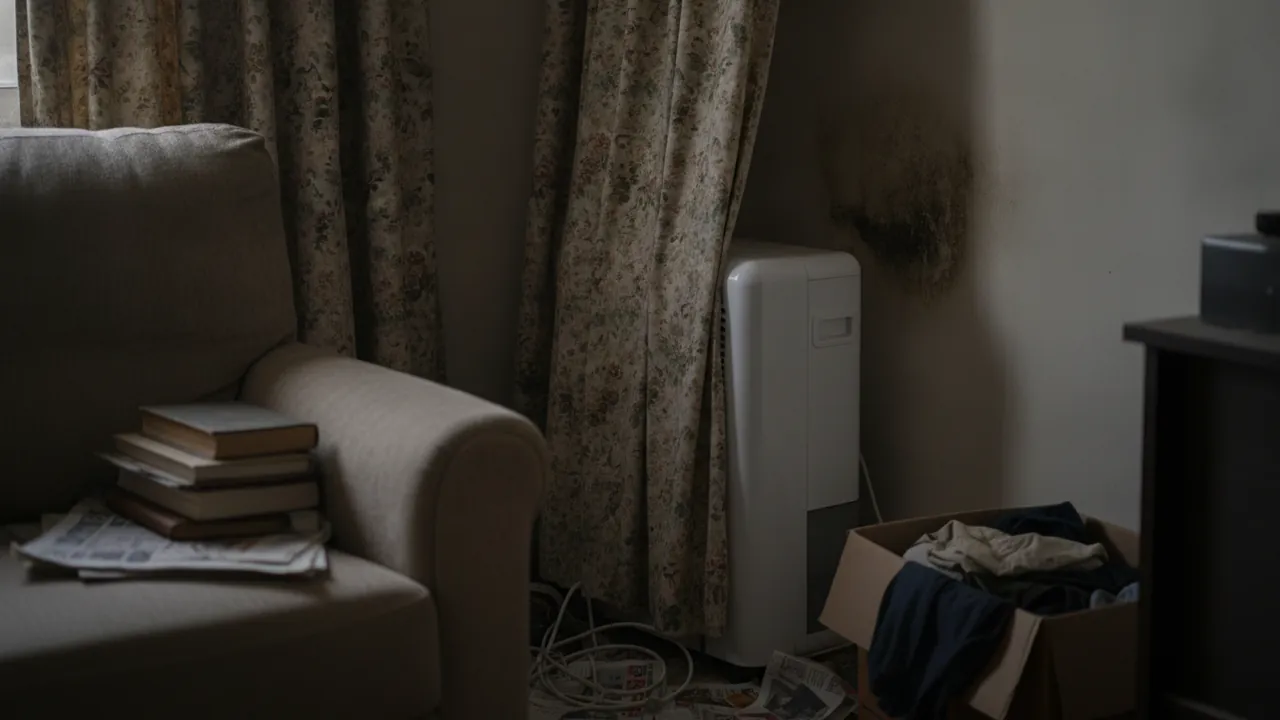
- Hiding it in a corner behind furniture. Air can’t get in or out; the machine dries a tiny pocket of air around itself.
- Tucking it behind curtains. Same problem — and the curtains stay damp.
- Putting it in the hallway “to cover two rooms”. Walls and doors block it. One room, one unit, doors closed.
- Placing it far from the problem. A unit by the window won’t save the wardrobe on the opposite wall.
- Standing it in a dusty spot — workshops, unswept stores — where dust clogs the filter and coils.
- Setting the humidistat too low. At 30% it runs forever and wastes power. Set about 50%. (Seven dehumidifier myths, busted.)
Where should a dehumidifier go in each room?
Bedroom
Central or near the bed’s far side, with clear air around it; door and windows closed in the evening. Point the outlet into the room, not at the bed. DRYAir’s DA-12LC is built to be quiet enough for this.
Wardrobe and almirah
In the bedroom, near the wardrobe, with its doors opened for part of the day so dry air reaches the clothes. (The thing growing behind your wardrobe.)
Living room or apartment
Somewhere central with space around it, near the dampest wall. Close internal doors to rooms you aren’t treating.
Laundry drying
In the same closed room as the clothes rack — the fastest, cheapest indoor drying there is.
Shops, stores and archives
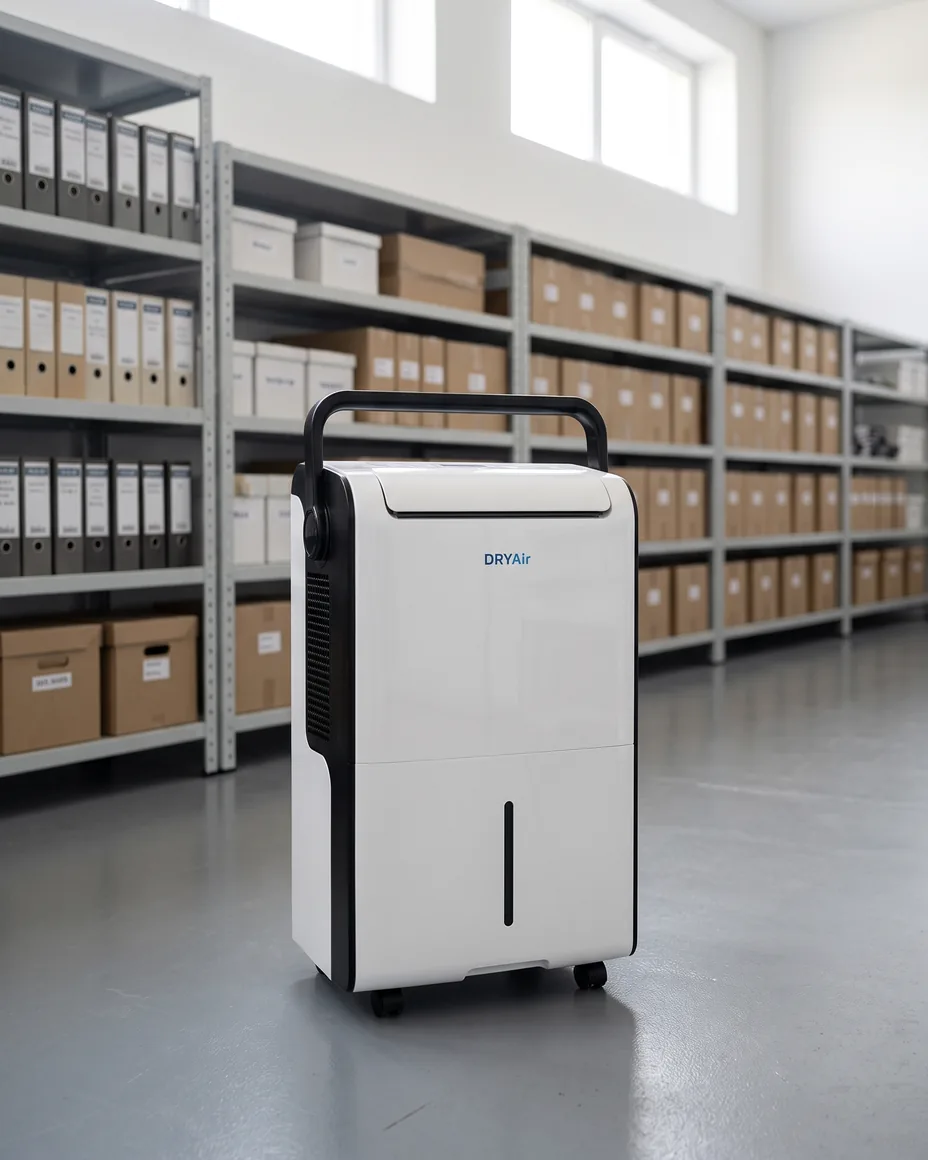
Close to the stock, with a continuous-drain hose run to a floor drain so it never stops for a full tank. Larger spaces may need two units at opposite ends rather than one big one in a corner. The DA-35L and DA-50L both take a drain hose.
How should you set up a new dehumidifier?
- Level floor, never on a bed or soft carpet that blocks the intake.
- Humidistat at 50% — it will switch itself on and off.
- Drain hose downhill all the way, with no kinks, and away from power cords.
- Clean the filter every couple of weeks — more often in dusty homes.
- Check with a hygrometer. The room should settle around 50% within a day or two once walls and furniture have released their stored moisture. (How to use a hygrometer.)
Still not sure which size or where? Send DRYAir a photo and the room measurements on WhatsApp, or try its size calculator.
The bottom line
A good dehumidifier in the wrong place is a fan that collects a little water. Put it in the room that matters, near the problem, with space around it and the doors shut — and it will do the job you bought it for.
Questions readers ask
Where is the best place to put a dehumidifier?
In the room you want to dry, with doors and windows closed, standing on a level floor with clear space around it so air can flow in and out. Put it near the damp problem — a mouldy wall or wardrobe — but not jammed against it or hidden behind furniture or curtains. Keep it away from dust sources, and keep drain hoses away from electrical cords.
Should doors be closed when a dehumidifier is running?
Yes. A dehumidifier dries the air in the space it can reach. With the door or window open, it is trying to dry the outdoors or the whole house, runs constantly and never reaches the target. Close the room, let it reach about 50%, and it will cycle on and off to hold it.
Sources
- ENERGY STAR (US EPA) — Dehumidifiers — buying and placement guidance
- US Environmental Protection Agency — A Brief Guide to Mold, Moisture and Your Home
Guidance from these bodies is general; figures for Sri Lanka come from our own reporting and DRYAir’s field experience.
Published . Spotted an error? Tell the desk.