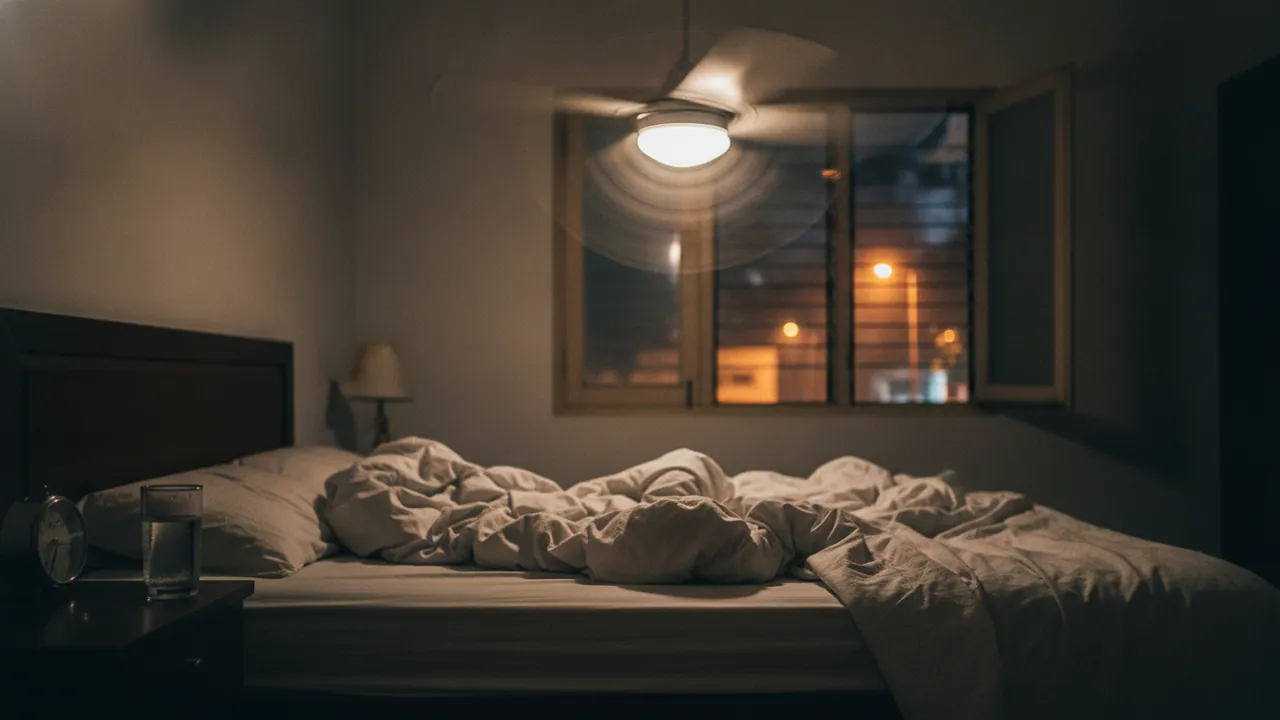
You went to bed at ten. You were up at six. Somewhere in between you kicked off the sheet, turned the pillow to the cool side three times, got up for water, and lay listening to the fan. In the morning you feel as if you hadn’t slept at all.
Most people blame the heat. Often, the real thief is the water in the air.
Why does humid air make it so hard to sleep?
To fall asleep and stay in deep sleep, your core body temperature needs to drop a little. In a warm climate the body sheds that heat mainly by sweating — and sweat only cools you when it evaporates. In very humid air, evaporation slows to a crawl, so the heat stays in, your skin stays sticky, and sleep keeps breaking. That is why a 28 °C night at 85% humidity feels far worse than a 28 °C night at 55%.
The result isn’t always full waking. More often it is restless, shallow sleep: tossing, half-waking, dreams you remember, and the heavy, unrested feeling the next day.
Heat makes you sweat. Humidity stops the sweat from working.
How humid is your bedroom at night?
Probably more humid than you think. Outdoor humidity across much of Sri Lanka climbs at night as the air cools — often above 85–90% in the wet zone. A closed bedroom with two people breathing in it follows that number closely, unless something is removing the moisture.
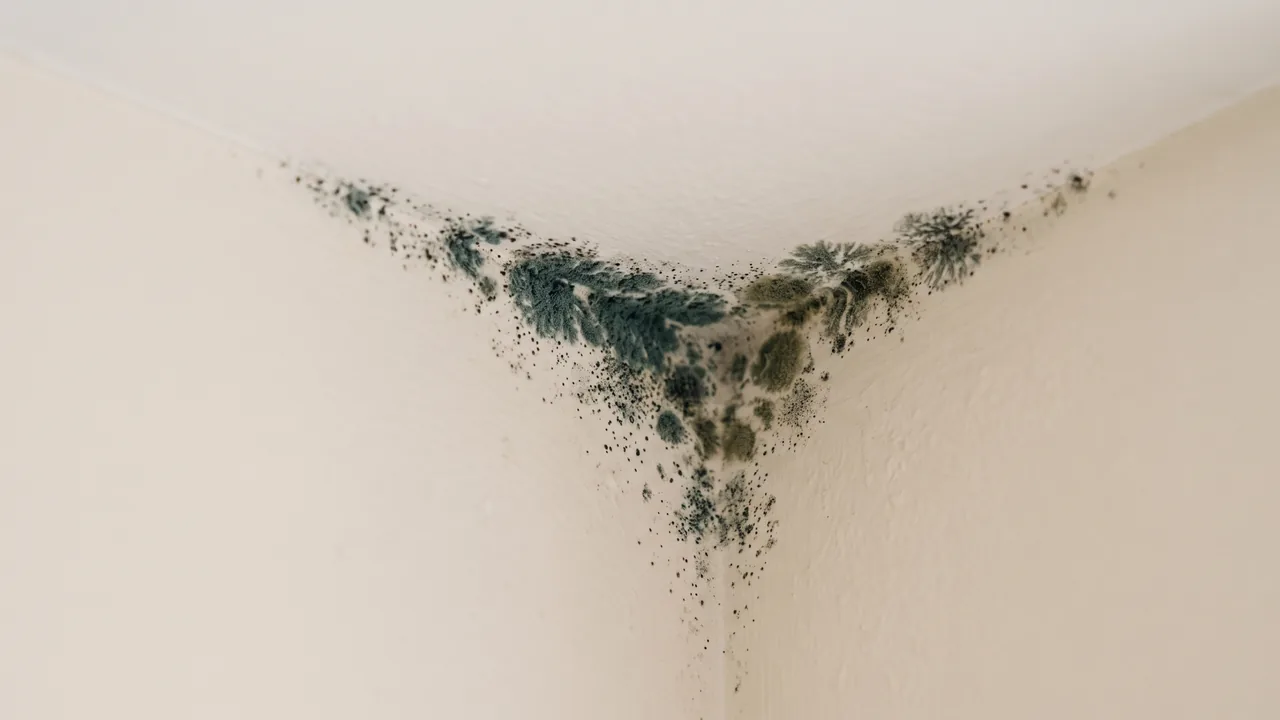
The US-based Sleep Foundation suggests that the best bedroom humidity for sleeping is roughly 30–50%. In Sri Lanka that is hard to reach and not necessary; 45–55% is a realistic target that feels markedly fresher and also keeps dust mites and bedroom mould in check. Put a hygrometer by the bed for one night and see where you are.
How do you know humidity is ruining your sleep?
Damp sheets on waking, constant tossing, feeling hot but unable to cool down under the fan, and waking tired — especially in the monsoon months.
- Waking with damp sheets or a damp pillow, even with the fan on
- Kicking off covers and turning over constantly
- Feeling hot but not able to cool down under the fan
- Waking tired and headachy, especially in the monsoon months
- A stuffy nose at night that clears during the day
- Sleeping much better in air-conditioned hotel rooms than at home
Why turning the AC colder isn’t the full answer
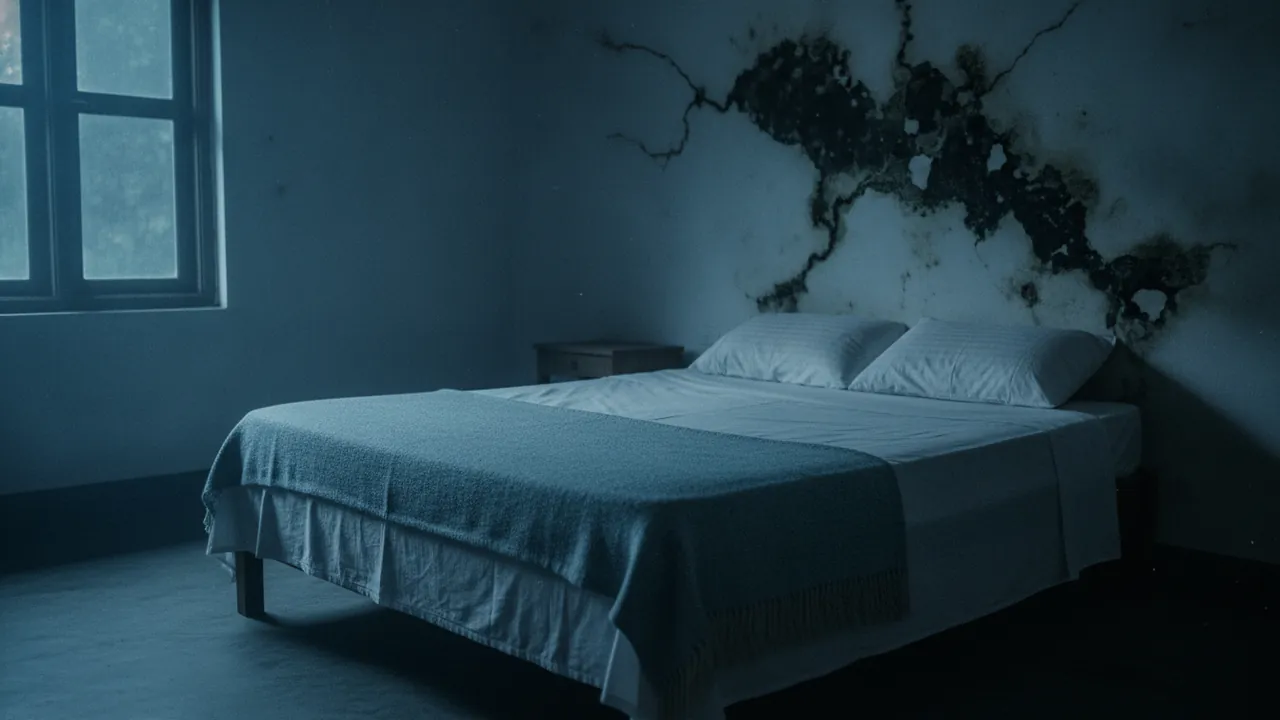
Many families respond by setting the AC to 20 or 21 °C. It works, up to a point — but an air conditioner removes moisture only while it is actively cooling. Once the room reaches the set temperature, the compressor cycles down and the humidity creeps back up. The room ends up cold and clammy, the electricity bill climbs, and the walls chilled by the AC become prime mould territory. (How AC and dehumidifiers differ.)
Control the humidity directly and comfort improves at a warmer setting. ASHRAE’s comfort standard treats humidity as part of how warm a room feels, alongside temperature and air movement.
How do you make a humid bedroom easier to sleep in?
Dry the room to about 50% from early evening, keep it there overnight with a quiet dehumidifier, and pair it with a fan or a gentler AC setting.
- Dry the room in the evening. Run a dehumidifier set to about 50% from early evening, door and windows closed. By bedtime the air — and the mattress — are drier.
- Then keep it there overnight. A quiet unit matters: DRYAir’s DA-12LC runs at around 39 dB, quiet enough to sleep beside, and covers bedrooms up to about 34 m².
- Pair it with a fan or a gentler AC setting. Moving air plus dry air is the most comfortable combination for many people.
- Choose breathable bedding. Cotton or linen sheets, washed weekly and fully dried — never put back on the bed slightly damp.
- No laundry drying in the bedroom. It adds litres of water to the air overnight.
- Air the mattress each morning by throwing the sheet back.
DRYAir’s own article on better sleep in dry air goes further into bedroom set-ups.
The bottom line
If you wake up exhausted after a full night in bed, look at the humidity before you blame the heat. Damp air keeps your body from cooling down, and sleep suffers for it. Bring the bedroom down to around 50%, and the same temperature suddenly becomes a room you can sleep in.
Questions readers ask
Does humidity affect sleep?
Yes. To sleep well your body temperature has to fall slightly, and in warm climates it sheds heat mainly through sweat evaporating from the skin. Very humid air slows that evaporation, so you stay hot and sticky, wake more often and get less deep sleep. Damp bedrooms also encourage dust mites and mould that can disturb breathing at night.
What is the best humidity for sleeping?
The US Sleep Foundation suggests a bedroom humidity of roughly 30% to 50%. In Sri Lanka, where outdoor air is often 70–90%, aiming for about 45–55% with a dehumidifier is a realistic, comfortable target that also keeps mould and dust mites in check.
Is it better to use AC or a dehumidifier at night?
They do different jobs and work well together. An air conditioner lowers temperature and removes some moisture only while cooling; a dehumidifier holds humidity at a level you set. With the bedroom at about 50% humidity, many people sleep comfortably with the AC a degree or two warmer — or with just a fan.
Sources
- Sleep Foundation — Best Humidity Level for Sleeping
- ASHRAE — Standard 55: Thermal Environmental Conditions for Human Occupancy
- World Health Organization — WHO Housing and health guidelines (2018)
Guidance from these bodies is general; figures for Sri Lanka come from our own reporting and DRYAir’s field experience.
Published . Spotted an error? Tell the desk.